
Skip to content

Top 10 Block Forming Machine Types for Global Buyers

Buying a Block Forming Machine is not simply a matter of comparing prices. Global buyers must examine production capacity, block dimensions, automation, energy use, and local service support. A machine producing 10,000 blocks daily may appear attractive, yet poor curing control can weaken the final product. Small details matter.

Dr. V. S. Ramachandran, a respected concrete-materials expert, emphasized, “Concrete performance depends on materials, proportioning, processing, and curing.” His principle remains valuable for block manufacturers. The machine is only one part of the production system. Aggregate quality, cement dosage, vibration, pressure, pallet handling, and curing conditions also influence results. This article introduces ten major Block Forming Machine types for international buyers. Each type serves different production goals, site conditions, and investment levels.

Some machines suit small contractors and limited workshops. Others support automated factories with conveyor lines, digital controls, and rapid mold changes. Hydraulic systems can deliver strong compaction. Mechanical models may offer simpler maintenance and lower entry costs. Mobile machines can reduce transport needs, but their output and dimensional consistency require careful review.

The ideal choice is rarely the most expensive model. It is the machine that matches local materials, labor skills, power supply, climate, and expected demand. That sounds obvious. It is often overlooked.

Buyers should also request trial production, inspect sample blocks, confirm spare-parts availability, and review realistic output figures. Manufacturer claims can be optimistic. Careful questioning protects the investment.
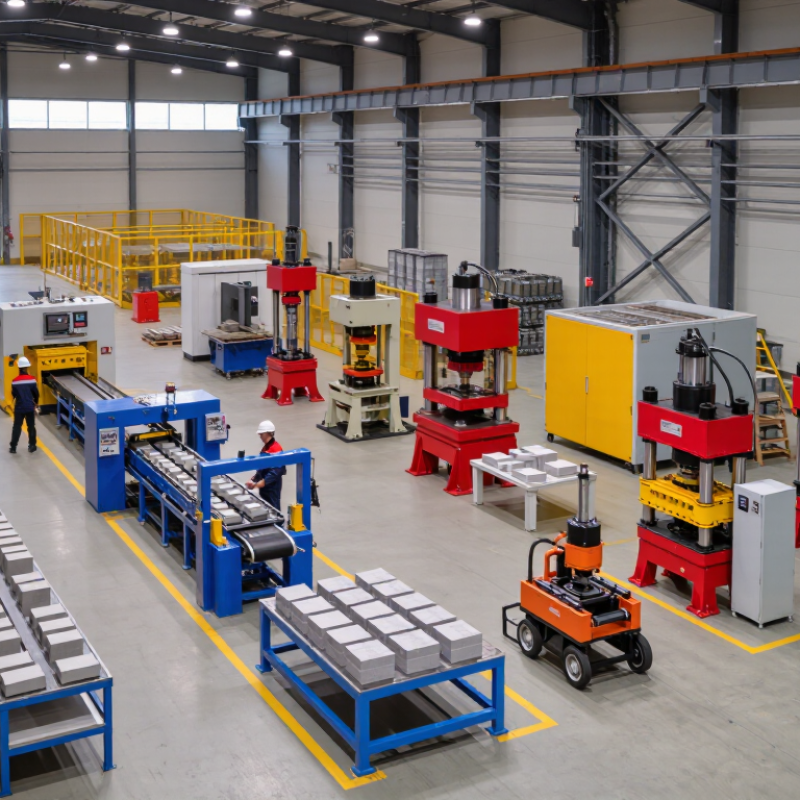
Top 10 Block Forming Machine Types for Global Buyers

What a Block Forming Machine Is and How It Shapes Building Materials

A block forming machine is industrial equipment that compresses concrete, soil, or other approved mixtures into building units. It uses a mold, controlled pressure, and measured vibration to create consistent shapes. Depending on the mold, one machine can produce hollow blocks, solid blocks, paving units, curbs, or interlocking products.

The forming cycle usually includes batching, mixing, filling, pressing, demolding, and curing. Each stage affects the final block. Too much water may cause cracks or weak edges. Too little moisture can prevent proper compaction. Vibration helps remove air pockets, while hydraulic pressure improves density and surface definition. The machine does not create strength alone. Material grading, cement proportion, curing time, and operator settings matter equally.

Common machine types

Common machine types include manual presses, semi-automatic systems, fully automatic lines, hydraulic models, and vibration-based units.

Some machines suit small construction yards, while others support high-volume production with automated stacking. Global buyers should compare mold flexibility, cycle speed, power requirements, maintenance access, and local safety compliance. A machine rated for one block size may perform poorly with another mold.

Small details matter.

From practical production experience, operators often focus on output numbers and overlook curing space. That is a mistake. A fast machine can still create delays when fresh blocks lack protected storage. Technical documents should state tolerances, recommended mix ranges, spare-part availability, and testing methods clearly. Even reliable equipment needs adjustment after installation, because local aggregates and climate can change performance.

Manual and Semi-Automatic Block Machines for Small-Scale Production

Among the top ten block forming machine types, manual and semi-automatic models suit small-scale production best. UN-Habitat reports that 1.6 billion people live in inadequate housing. This creates demand for affordable, locally produced masonry units.

Manual machines need little electrical infrastructure. Operators fill the mold, compact the mix, and release each block by hand. Output often depends on crew rhythm, moisture control, and curing space. Semi-automatic machines add powered vibration or hydraulic pressing. They reduce physical strain and improve dimensional consistency. A practical small workshop may produce several hundred blocks daily, depending on mold size and labor.

Small details matter. Keep aggregate grading consistent. Measure water with a container, not guesswork. The Global Cement and Concrete Association estimates that roughly 14 billion cubic meters of concrete are produced annually worldwide. That scale does not guarantee quality at the workshop level. A recent industry review from Grand View Research also identifies infrastructure growth as a major demand driver for concrete blocks and bricks. However, market forecasts can hide local problems, including unreliable power, limited spare parts, and weak curing discipline. A cheaper machine may become expensive when downtime is frequent. This is where buyers should compare cycle time, mold availability, maintenance access, and operator training, not only purchase price. Mistakes still happen. Even experienced operators can overestimate output during the first production month.

Top 10 Block Forming Machine Types for Global Buyers - Manual and Semi-Automatic Block Machines for Small-Scale Production

Rank Machine Type Operating Method Typical Output
(pieces/hour)
Common Products Typical Power
Requirement
Operators Best Application
1 Manual Lever Block Press Hand-operated mechanical compaction 60–120 Solid and hollow concrete blocks No electricity 2–3 Remote areas, entry-level production, and projects with limited capital
2 Manual Hydraulic Block Machine Hand-loaded hydraulic pressing 100–220 Concrete blocks and bricks 1.5–4 kW 2–4 Small workshops requiring higher compaction than a basic lever press
3 Manual Egg-Laying Block Machine Vibration and manual mold release on the floor 80–180 Hollow blocks, solid blocks, and paving units 2.2–5.5 kW 3–5 Small construction sites where pallets and a large factory floor are unavailable
4 Semi-Automatic Stationary Vibration Machine Mechanical filling with vibration and manual pallet handling 300–700 Hollow and solid concrete blocks 5.5–15 kW 4–7 Small commercial block yards with regular daily production
5 Semi-Automatic Hollow Block Machine Powered vibration, hydraulic pressure, and manual stacking 400–900 Hollow blocks in several wall thicknesses 7.5–18.5 kW 5–8 Residential construction markets with demand for lightweight wall units
6 Semi-Automatic Paver Block Press Hydraulic pressing with vibration and manual pallet transfer 300–900 Interlocking pavers and landscaping tiles 7.5–22 kW 5–8 Driveways, sidewalks, courtyards, and municipal paving work
7 Semi-Automatic Curb Stone Machine Mold filling, vibration, and hydraulic compaction 100–300 Road curbs, channels, edging, and drainage units 5.5–15 kW 4–6 Road improvement contractors and precast concrete workshops
8 Mobile Concrete Block Machine Self-propelled or movable floor production with vibration 250–600 Hollow and solid blocks 5.5–15 kW 4–7 On-site production for housing projects and locations with limited transport access
9 Compressed Earth Block Machine Mechanical or hydraulic compaction of stabilized soil 150–450 Interlocking soil blocks and earth bricks 3–15 kW 3–6 Sustainable construction using locally available soil and limited cement
10 Multi-Purpose Semi-Automatic Block Machine Interchangeable molds with hydraulic pressure and vibration 250–750 Blocks, pavers, curbs, and small precast units 7.5–22 kW 5–8 Small producers serving multiple local construction and landscaping segments

Data note: Output figures are indicative production ranges for small-scale operations and vary with block dimensions, mold configuration, raw-material quality, curing method, operator skill, and working cycle. Actual electrical requirements depend on the machine configuration and local power supply.

Hydraulic and Fully Automatic Machines for High-Volume Manufacturing

Top 10 Block Forming Machine Types for Global Buyers

The wider market includes manual, semi-automatic, fully automatic, hydraulic, vibration, mobile, stationary, paver, hollow-block, and interlocking machines. For high-volume manufacturing, hydraulic and fully automatic models usually deserve closer attention. Hydraulic pressure helps produce blocks with consistent density and sharper edges. It also handles demanding mixtures with less visible cracking. However, performance depends on mold design, moisture control, and curing conditions.

A fully automatic block forming machine connects batching, feeding, pressing, pallet handling, and product transfer. Operators can monitor production from a control panel instead of lifting heavy molds repeatedly. Sensors may detect material shortages, pallet errors, or abnormal pressure. This reduces downtime and improves workplace safety. Still, automation is not magic. Poorly calibrated sensors can interrupt a busy production line. Regular inspection remains essential.

Buyers should compare output per hour, block dimensions, mold-changing time, energy use, and spare-part access. A machine producing 2,000 hollow blocks hourly may not suit a plant making dense pavers. Check the actual cycle time with your preferred mix. Ask for test samples, maintenance records, and operator training details. Floor strength matters too. A heavy hydraulic press can expose weak foundations quickly. I have seen buyers focus on advertised capacity and overlook curing space, which later limits real production. A practical layout should leave room for pallets, storage, cleaning, and safe movement. Quality control needs simple checks, such as weight, dimensions, surface finish, and compressive strength.

Specialized Machines for Concrete, Paving, Hollow, and Interlocking Blocks

Top 10 Block Forming Machine Types for Global Buyers

Specialized Machines for Concrete, Paving, Hollow, and Interlocking Blocks

Concrete block machines serve different production goals, site conditions, and product designs. Buyers may choose manual, semi-automatic, or fully automatic systems. Each option affects output, labor needs, mold changes, and maintenance. Concrete machines suit standard masonry units and structural blocks. They require stable mixes, accurate vibration, and controlled pressure. Small factories often prefer simpler equipment. It is easier to inspect and repair.

Paving block machines need stronger compaction and precise mold alignment. They produce driveway pavers, walkway slabs, and roadside units with consistent edges. Hollow block machines reduce material use through internal cavities. Their core pins must remain straight during repeated cycles. Interlocking block machines create shapes that connect without thick mortar joints. They depend heavily on mold quality and careful moisture control. A small mix error can damage the locking pattern.

Experienced buyers should compare cycle time, block dimensions, motor capacity, mold life, and spare-part access. Local power supply also matters. A machine tested under one voltage may perform differently elsewhere. Review production samples before signing a purchase agreement. Check curing space, drainage, and operator training requirements. No machine fits every site. Even experienced teams sometimes overestimate real output. Laboratory figures can look impressive, but daily production includes cleaning, mold changes, and minor stoppages. That gap deserves honest attention.

Top 10 Block Forming Machine Types for Global Buyers

Typical output benchmarks for specialized machines used to produce concrete, paving, hollow, curbstone, permeable, and interlocking blocks. Values show the midpoint of commonly specified production ranges for an 8-hour shift; actual output depends on block size, cycle time, curing method, mold configuration, and automation level.

Unit: finished blocks per 8-hour production shift. These are practical planning benchmarks rather than market-share figures.

How Global Buyers Compare Machine Capacity, Features, and Operating Costs

Top 10 Block Forming Machine Types for Global Buyers

Global buyers should compare output capacity before counting automation features. Common options include manual, semi-automatic, fully automatic, hydraulic, vibropress, egg-laying, stationary, mobile, hollow-block, and paving-block machines. Reported capacities often range from 1,000 to 20,000 blocks per shift, depending on block size, curing time, mold changes, and operator skill. These figures are not directly comparable.

Energy deserves closer attention. The International Energy Agency estimates that cement production creates about 2.3 gigatonnes of direct CO2 emissions annually, or roughly 7% of global emissions. A machine using less electricity per formed block can therefore reduce both operating costs and environmental pressure. Buyers should request measured kWh per 1,000 blocks, not general energy claims. Small details matter. Hydraulic oil leaks, vibrating-table wear, and delayed mold replacement can quietly increase costs.

Labor costs also change the ranking. A fully automatic line may reduce staffing, but it usually requires stronger maintenance skills and more expensive spare parts. A semi-automatic machine may suit markets with affordable labor and limited technical support. The World Green Building Council reports that buildings account for approximately 34% of global energy demand, reinforcing the value of efficient construction materials and production systems. Still, capacity calculations can be misleading. A machine rated for 10,000 blocks may produce far fewer usable units during rainy curing conditions. Buyers should test local aggregates, measure cycle times, and calculate five-year maintenance costs before choosing.