What is Software Robotics and How Does it Transform Industries?
Software robotics is reshaping the way industries operate today. This technology automates repetitive tasks, enhancing efficiency. Companies can streamline workflows and reduce human error with software robotics.
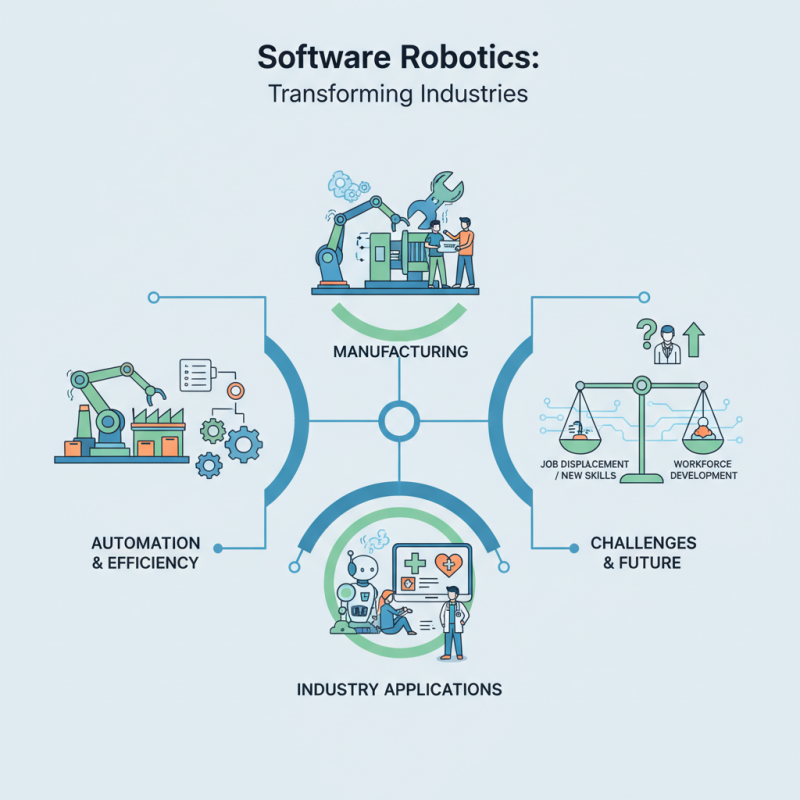
Imagine a manufacturing floor where robots handle assembly with precision, while operators focus on more complex problems. In healthcare, software robotics aids in patient management, freeing professionals for better care. However, this shift raises concerns about job displacement. Workers may need new skills, which can create a gap.
Industries must adapt to the changes brought by software robotics. Companies face challenges in integrating these systems into existing processes. Yet, the potential benefits are substantial. As businesses pursue innovation, they must consider both efficiency and workforce development. This balance will define the future of work.
Definition of Software Robotics: Overview and Key Concepts
Software robotics is an emerging concept that combines automation and artificial intelligence. It focuses on automating repetitive tasks across various industries. According to a recent report by Gartner, nearly 65% of businesses plan to adopt some form of software robotics by 2025. This significant trend indicates that organizations are beginning to recognize the potential of software robots in enhancing efficiency and reducing costs.
Key concepts in software robotics include robotic process automation (RPA) and machine learning. RPA enables software bots to mimic human actions, processing large volumes of data quickly. A study by Deloitte revealed that companies using RPA experience a 30% increase in productivity. Despite these advantages, implementing software robotics poses challenges. Many organizations struggle with integration and change management. Ensuring that employees adapt to new technologies requires thoughtful planning.
Moreover, while software robotics can lead to significant gains, it also raises concerns about job displacement. The World Economic Forum anticipates that automation might replace 85 million jobs by 2025. Balancing the benefits of efficiency with the potential social impacts is a complex issue. Businesses must navigate these challenges as they embrace software robotics in their operations.
Types of Software Robotics: Frameworks and Technologies
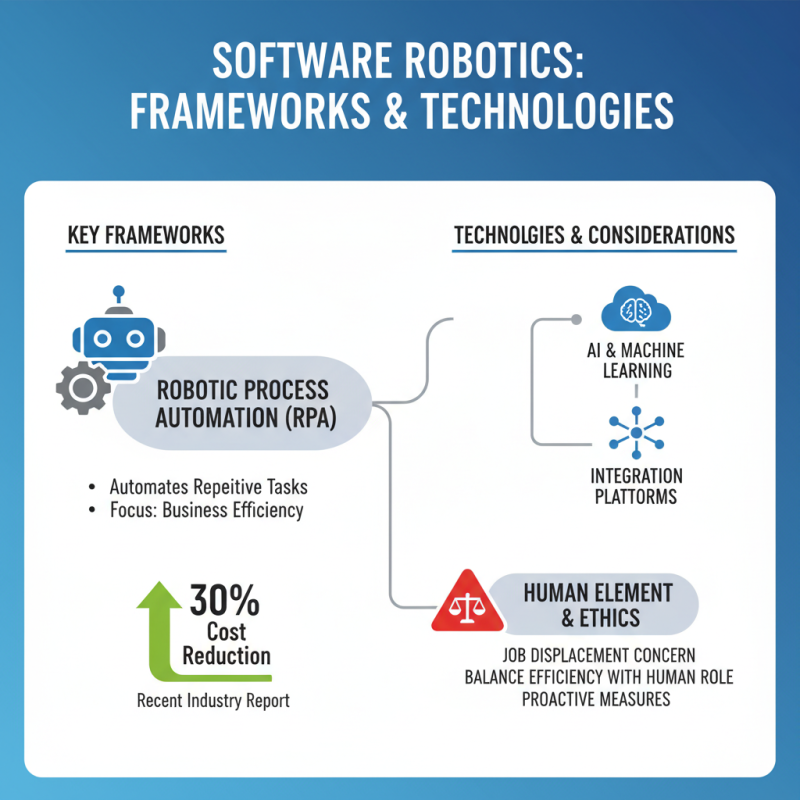
Software robotics is reshaping various industries through diverse frameworks and technologies. Robotic Process Automation (RPA) stands at the forefront, allowing businesses to automate repetitive tasks. In fact, a recent industry report noted that RPA can lead to a 30% reduction in operational costs. Yet, it is essential to balance efficiency with the human element. Over-reliance on automation may lead to job displacement, a concern that businesses should address proactively.
In the realm of software robotics, several technologies are in play. Machine Learning enhances decision-making processes, while Cognitive Automation simulates human interaction. According to a survey, 70% of organizations are investing in AI-driven robotics to improve customer service. However, the integration of these technologies can be complicated. Data privacy and security remain persistent issues that organizations must navigate carefully. Moreover, employee training is often overlooked. If staff are not adequately prepared, the full potential of software robotics may not be realized.
As industries continue to evolve, staying informed about the latest frameworks and developments is crucial. Companies must weigh the benefits against the challenges. Only then can they effectively harness the transformative power of software robotics.
Applications of Software Robotics in Various Industries
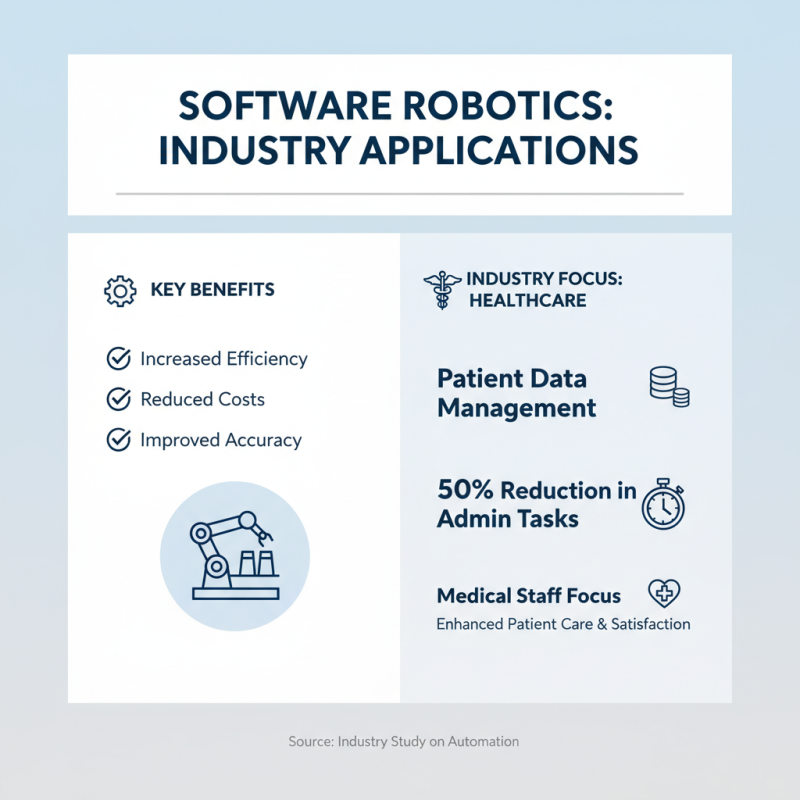
Software robotics is gaining traction across various industries, reshaping processes and driving efficiency. In healthcare, for instance, software robots assist in managing patient data. A study found that automation can reduce administrative tasks by 50%. This allows medical staff to focus on patient care, increasing satisfaction.
In finance, software robotics streamlines operations like compliance and reporting. According to a recent report, firms employing robotic process automation saw a 30% reduction in processing time. However, the integration of these technologies isn’t without challenges. Many companies struggle with change management and employee resistance. This can hinder the full realization of potential benefits.
Manufacturing is also experiencing transformation. Software robots control equipment, optimizing production lines. Data indicates a 20% increase in output quality with automated systems. Yet, reliance on automation raises concerns about job displacement. Companies must address these issues while maximizing the advantages of software robotics. The path forward requires careful planning and reflection on the human element in these transformations.
Transformational Impacts of Software Robotics on Business Processes
Software robotics brings a new era to business processes. It automates repetitive tasks, leading to increased efficiency. Companies can save time and resources. Think of data entry or invoice processing. These tasks bore employees and consume valuable hours. By using robotic software, these processes can be completed instantly.
The transformational impact is evident across various industries. In customer service, chatbots can handle inquiries around the clock. They provide instant responses, improving customer satisfaction. However, reliance on automation can lead to challenges. Sometimes, customers prefer human interaction. It’s important for businesses to strike a balance.
Moreover, software robotics raises questions about job displacement. Employees might fear losing jobs to automation. Reskilling becomes essential in this evolving landscape. The integration of software robotics requires a thoughtful approach. Businesses must consider the human aspect as they embrace technology. The journey is not without bumps, yet the rewards can be significant.
What is Software Robotics and How Does it Transform Industries?
| Industry |
Transformation Aspect |
Impact Description |
Benefits |
| Manufacturing |
Process Automation |
Automation of repetitive tasks, reducing human error. |
Increased efficiency, lower operational costs. |
| Healthcare |
Data Management |
Streamlining patient data entry and retrieval. |
Improved patient care and faster service delivery. |
| Finance |
Fraud Detection |
Utilizing AI to identify suspicious transactions. |
Enhanced security and reduced financial losses. |
| Retail |
Customer Service |
Implementing chatbots for customer interaction. |
Improved customer satisfaction and 24/7 support. |
| Logistics |
Inventory Management |
Automating stock level tracking and reordering. |
Reduced stockouts and improved inventory turnover. |
Future Trends in Software Robotics and Industry Evolution
The future of software robotics is rapidly evolving. According to a recent report by Gartner, the market for robotic process automation (RPA) is expected to reach $2.9 billion by 2023. This growth highlights its impact on industries such as finance, healthcare, and manufacturing. Companies are increasingly adopting automation to streamline processes and reduce costs. Yet, the challenge remains: not all organizations successfully integrate these technologies.
As software robotics transforms industries, the focus shifts to enhancing collaboration between humans and machines. A study by Forrester predicts that by 2025, 50% of all business processes will be automated in some capacity. This transformation brings both excitement and concern. Employees may fear job displacement, while companies struggle with ethical implications. Effective communication and training will be crucial in navigating this change.
Moreover, many firms face issues in scaling robotic solutions. According to Deloitte, only 31% of RPA initiatives reach full production. Businesses often underestimate the complexity of their workflows. This leads to fragmented solutions and lost opportunities. Addressing these challenges will be essential for any organization looking to leverage software robotics effectively. The future is promising, but not without hurdles.