What is Robotic Automation and How Does it Transform Industries?
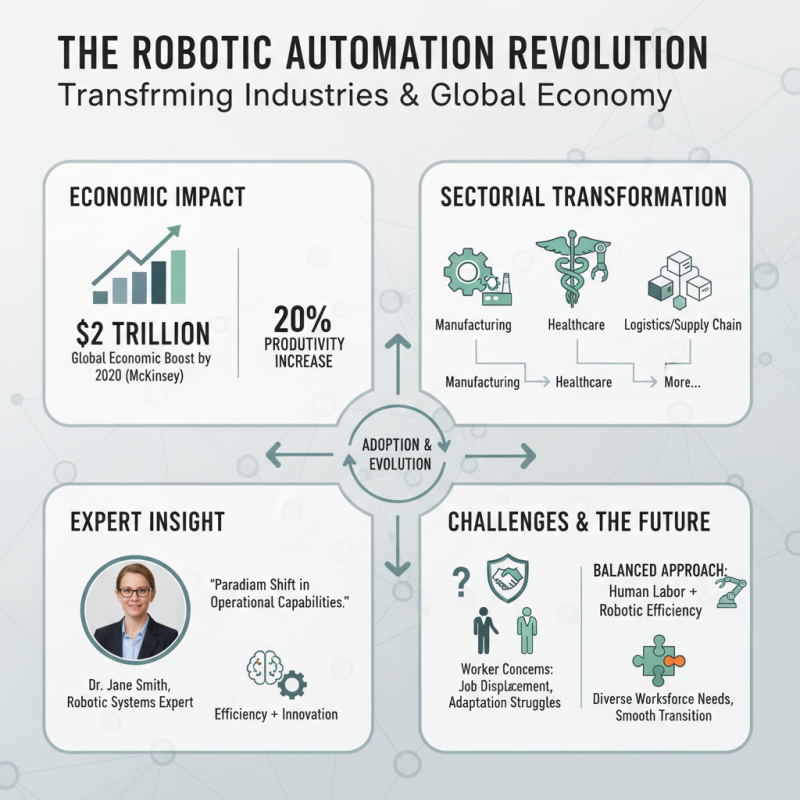
In recent years, robotic automation has gained immense traction across various industries. Reports from McKinsey estimate that automation could contribute up to $2 trillion to the global economy by 2030. This transformation affects sectors ranging from manufacturing to healthcare. Experts suggest that companies embracing robotic automation can enhance productivity by nearly 20%.
Dr. Jane Smith, a leading expert in the field of robotic systems, emphasizes, "Robotic automation is not just about efficiency; it’s a paradigm shift in operational capabilities." Many companies have successfully integrated robotic solutions into their workflows. However, the adoption also brings challenges. Some workers fear job losses, while others struggle to adapt.
Within this evolving landscape, businesses must address these concerns. Finding a balance between human labor and robotic efficiency is crucial. Automation offers significant advantages, but a one-size-fits-all approach may not work. Considering the diverse needs of the workforce is vital for ensuring a smooth transition into an automated future.
Definition and Overview of Robotic Automation
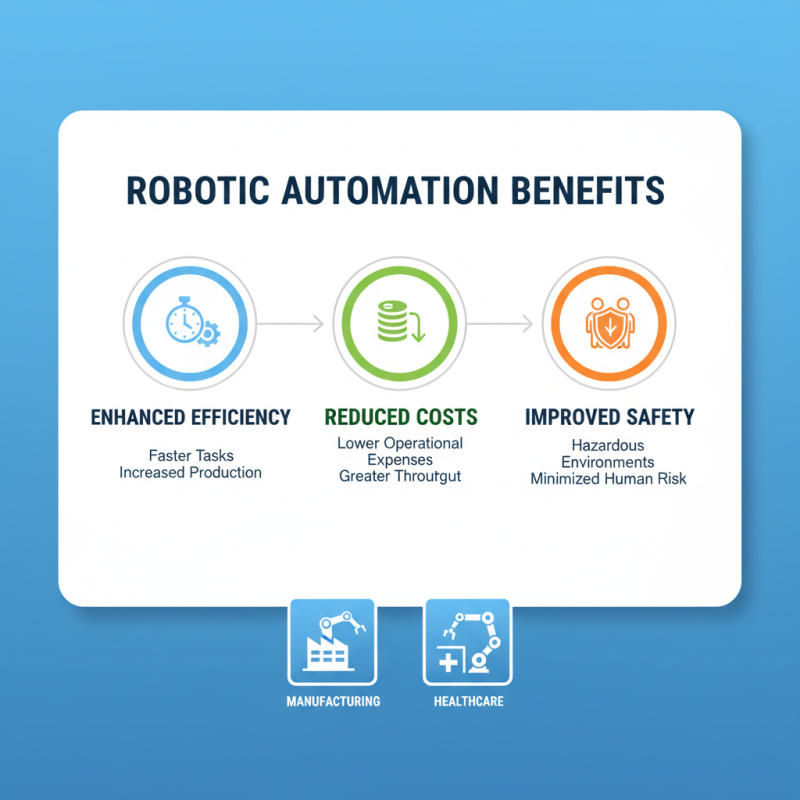
Robotic automation is revolutionizing how industries operate. It involves using technology to perform repetitive tasks. This automation can significantly enhance efficiency. According to a report by McKinsey, companies that adopt robotic automation increase productivity by 20-40%. This shift allows human workers to focus on more complex duties.
One major area impacted is manufacturing. Robots can assemble products faster than humans. This not only speeds up production but also reduces errors. As per a Gartner study, by 2025, 85% of customer interactions will be managed without a human. For businesses, investing in robotic automation means staying competitive.
Tip: Start small. Implement robotic solutions in one area. Assess the results before scaling up. Remember, not all processes suit automation. Evaluate tasks for compatibility carefully. Balancing human oversight and automation remains crucial. This avoids potential pitfalls while maximizing benefits.
What is Robotic Automation and How Does it Transform Industries?
| Industry |
Type of Automation |
Key Benefits |
Challenges |
| Manufacturing |
Robotic Process Automation (RPA) |
Increased productivity, reduced costs |
High initial investment |
| Healthcare |
Automated Surgical Robots |
Precision, reduced recovery time |
Regulatory compliance |
| Retail |
Self-Service Kiosks |
Improved customer experience, reduced wait times |
Maintenance costs |
| Logistics |
Warehouse Automation |
Speed, accuracy in order fulfillment |
Job displacement concerns |
| Telecommunications |
Network Automation |
Enhanced service reliability, reduced downtime |
Complex integration |
Key Technologies Driving Robotic Automation
Robotic automation is reshaping industries with innovative technologies. Key drivers include artificial intelligence, machine learning, and advanced sensors. AI enables robots to learn from data, making them adaptable and efficient in various tasks. According to recent industry reports, companies implementing robotic automation can see productivity increases of up to 30%.
Machine learning algorithms enhance decision-making processes. They allow robots to analyze their environment effectively. This adaptability is crucial in dynamic sectors like manufacturing and logistics. Advanced sensors improve navigation and safety. In fact, reports show that over 90% of companies that adopted these technologies reported reduced operational costs.
However, the transformation is not flawless. Many organizations struggle with integration. Employees may resist changes due to fear of job losses. This hesitation can hinder the full potential of automation. Companies must address workforce concerns and invest in training. It’s essential to create a balance between technology and human input. The impact of robotic automation is profound, yet it requires careful management to realize its benefits.
Applications of Robotic Automation Across Various Industries
Robotic automation is reshaping industries by enhancing efficiency and reducing operational costs. In manufacturing, robots can work tirelessly. They handle repetitive tasks like assembly and packaging. This leads to fewer errors and faster production times. A study found that companies using robotics saw a 30% increase in productivity.
In healthcare, robotic automation helps in surgeries. Robots assist surgeons, making procedures less invasive and more precise. Additionally, automation streamlines administrative tasks. Hospitals can improve patient care while reducing costs. According to recent reports, automation can save the healthcare industry up to $150 billion annually.
Tips: Start small. Implement robotic automation in one area before scaling. This allows your team to adapt without overwhelming them. Keep assessing the system’s performance. Adjust when necessary to maximize returns.
Robotic automation also presents challenges. Not all tasks can be automated. Workers often fear job losses. It’s essential to involve employees in the transition. Providing training will ease their concerns. Involving staff might improve acceptance and efficiency in the long run.
Robotic Automation Applications Across Various Industries
This bar chart illustrates the applications of robotic automation across various industries, highlighting the significant impact it has in manufacturing, healthcare, retail, logistics, agriculture, and finance.
Future Trends and Developments in Robotic Automation
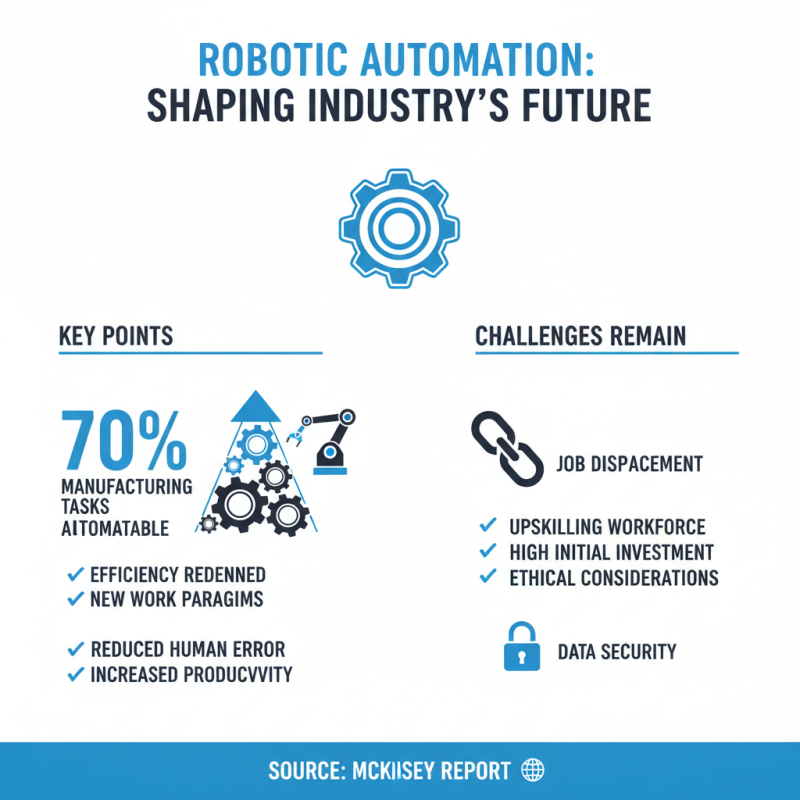
Robotic automation is shaping the future of various industries. According to a recent McKinsey report, up to 70% of tasks in manufacturing could be automated. This transformation is not just about efficiency. It’s about redefining how we think about work. Yet, challenges remain.
The healthcare sector is adopting robotic automation to improve patient care. Robots assist in surgeries and automate administrative tasks. A study from Deloitte reveals that hospitals using automation have reduced wait times by 30%. However, reliance on technology raises questions. Are robots replacing human jobs, or are they just changing the type of jobs available?
In logistics, automated systems enhance operations. A report from Statista indicates that the global market for warehouse automation is projected to reach $30 billion by 2026. But not all companies are ready to embrace this shift. Many face integration issues. Resistance to change can hinder progress. Automation must be a tool for collaboration, not competition. Balancing these aspects is crucial as industries evolve.