Why is Automation Essential for Modern Businesses?
In today's fast-paced world, automation plays a vital role in business success. It streamlines processes and enhances productivity. Many companies face challenges in keeping up with market demands. Without automation, they struggle to remain competitive.
Automation reduces human error and boosts efficiency. Tasks that once took hours can now be done in minutes. However, implementing automation is not without its hurdles. Some employees may resist change, fearing job loss. This resistance can hinder progress and create tension.
Moreover, automation must be carefully integrated. Companies need to assess their specific needs. Not every process may require automation. Balancing between human input and automated systems is crucial. Reflecting on these aspects can lead to a more successful transition. Embracing automation, while addressing its challenges, is essential for modern businesses.
The Role of Automation in Improving Operational Efficiency
In today’s fast-paced business world, automation plays a crucial role in improving operational efficiency. It streamlines tasks and reduces human error. For instance, using automated systems can handle data entry, allowing employees to focus on more strategic initiatives. This shift can enhance productivity and lead to better decision-making.
However, automation isn't a one-size-fits-all solution. Companies often face challenges in implementing automated processes. There can be a steep learning curve for employees. Some may resist changes, fearing job loss or increased complexity. It’s important to address these concerns. Communication and training are essential to ensure a successful transition.
Additionally, not all tasks should be automated. Some tasks benefit from human insight and creativity. Finding the right balance is key to maximizing efficiency. Businesses must continually assess which areas can be automated and which require a human touch. Embracing automation is vital, but it demands careful thought and reflection.
Impact of Automation on Cost Reduction and Resource Management
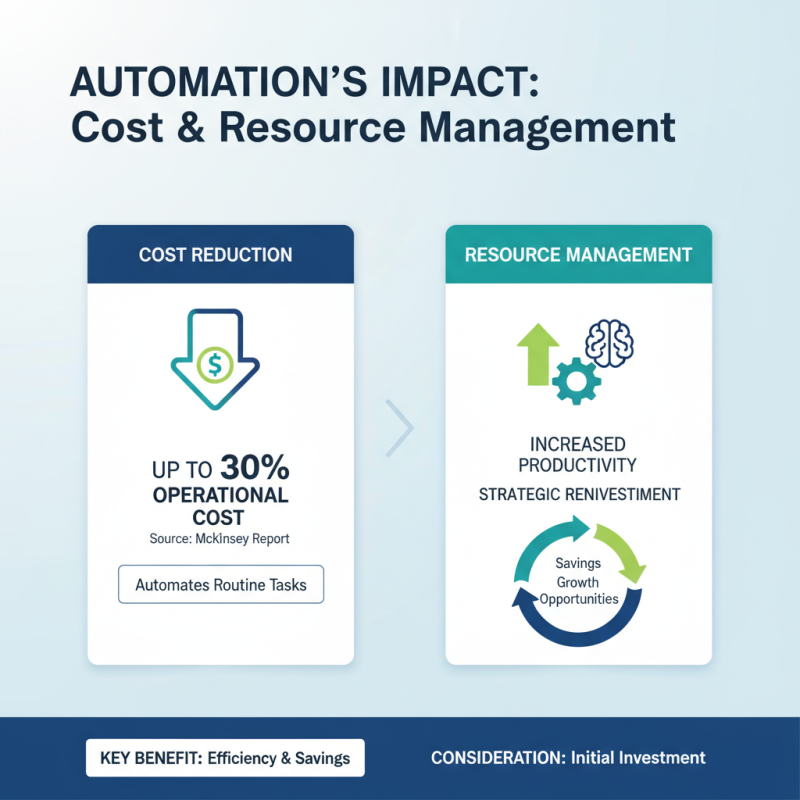
Automation plays a vital role in modern businesses, particularly regarding cost reduction and resource management. According to a report by McKinsey, automating routine tasks can reduce operational costs by up to 30%. This significant reduction allows businesses to allocate resources more effectively and reinvest savings into growth opportunities. Many companies experience increased productivity. However, the initial investment in automation tools can be daunting.
Implementing automation also streamlines resource management. A study by Deloitte found that companies using automation report a 45% improvement in resource allocation. This efficiency ensures that employees can focus on strategic tasks rather than mundane ones. However, organizations must ensure a balanced approach to automation. Blind reliance on technology can lead to skill gaps and employee dissatisfaction.
Tip: Start small with automation. Identify low-hanging fruit in your daily operations that can benefit from technology. Regularly assess the impact of automation on your team’s morale and overall productivity. Adapting gradually can help mitigate transitional challenges.
Another critical aspect is monitoring performance post-automation. Some businesses fail to track metrics effectively. This oversight may lead to missed opportunities for optimization. Yet, reviewing results is essential. It ensures that automation meets its intended goals while enhancing employee roles. Developing a feedback loop helps refine processes for better outcomes.
How Automation Enhances Customer Experience and Engagement
Automation plays a pivotal role in enhancing customer experience and engagement. It streamlines customer support, providing instant responses. Customers appreciate quick answers to their inquiries. Chatbots and automated service platforms handle routine questions efficiently. They can manage multiple queries simultaneously, reducing wait times significantly. However, not all automated interactions feel personal. This is a challenge that needs addressing.
When businesses utilize automation, they can create personalized experiences. For instance, data-driven insights allow for targeted marketing efforts. Personalized recommendations can guide users toward products they genuinely want. Yet, relying solely on algorithms may overlook unique customer preferences. This could lead to missed opportunities for deeper connections.
Engagement also improves through automation in follow-ups. Sending reminders and updates via email is automated, ensuring customers stay informed. However, too much automation can feel robotic. Customers can sense when they are just another number. Striking a balance between automation and human touch is essential. Businesses must constantly evaluate their strategies to refine customer interactions.
The Link Between Automation and Workforce Productivity
Automation has become crucial for businesses aiming to enhance workforce productivity. By streamlining repetitive tasks, employees can focus on more significant responsibilities. This shift often leads to increased job satisfaction and efficiency. Tasks such as data entry or inventory management can be handled automatically, freeing up valuable time.
However, the integration of automation is not without its challenges. Some employees may feel threatened by new technologies. They might worry about job security or struggle to adapt. Training is essential to ease this transition. Companies must invest in upskilling their workforce to maximize automation benefits. This investment can create a more aligned and capable team.
While automation enhances productivity, human oversight remains vital. Technology cannot replace creativity or emotional intelligence. Businesses must find a balance between automated processes and human input. It is essential to reflect on how technology is reshaping the workplace. Automation should empower employees, not limit their potential.
Why is Automation Essential for Modern Businesses? - The Link Between Automation and Workforce Productivity
| Aspect |
Before Automation |
After Automation |
Improvement (%) |
| Time Spent on Manual Processes |
40 hours/week |
25 hours/week |
37.5% |
| Error Rate in Data Entry |
5% |
1% |
80% |
| Employee Satisfaction Score |
70% |
85% |
21.4% |
| Cost of Operations |
$100,000/year |
$75,000/year |
25% |
| Customer Response Time |
24 hours |
1 hour |
95.8% |
Trends in Automation Technology and Future Business Strategies
Automation is reshaping the landscape of modern business. According to a recent report by McKinsey, around 60% of jobs could be automated by the mid-2030s. This shift is not just about replacing workers. It's about enhancing productivity. Companies that embrace automation can realize improvements in efficiency and cost savings.
Recent trends indicate a growing reliance on artificial intelligence and machine learning. A survey by Deloitte found that 70% of organizations plan to increase their investment in automation technology. However, this transition is not without challenges. Many companies face hurdles such as employee resistance and the need for upskilling. A study from PwC revealed that only 35% of businesses have a clear automation strategy. This lack of vision can lead to missed opportunities.
Looking ahead, businesses must adapt their strategies to integrate automation effectively. They should consider the ethics of automation and its impact on employment. Moreover, the focus on customer experience is critical. Researchers at Forrester highlight that 80% of companies believe that automation will improve customer satisfaction. Yet, companies must be cautious. Rushing into automation without careful planning can result in unintended consequences, such as customer frustration or operational disruptions.
Automation Trends in Modern Businesses
This chart illustrates the adoption rates of various automation technologies in modern businesses, highlighting the increasing reliance on automated systems for efficiency and improved performance.