10 Essential Tips for Building an Effective Automation Catalogue?
Creating an effective automation catalogue is crucial for any organization aiming to improve efficiency. An automation catalogue serves as a comprehensive list of processes that can be automated, enabling teams to streamline their workflows. But how do you build one that truly meets your needs?
Consider the diverse range of tasks within your organization. Each task has different requirements and complexities. Your automation catalogue must reflect this variety. Prioritize clear descriptions, actionable steps, and measurable outcomes for each item. This clarity will guide users in selecting the right automations.
However, challenges may arise. Teams may overlook certain tasks or fail to update the catalogue regularly. Without maintenance, your automation catalogue can become outdated and ineffective. Regular reviews and stakeholder feedback are essential for keeping the catalogue relevant. Building an effective automation catalogue is not just about listing tasks; it requires continuous reflection and adaptation.

Understanding Automation Catalogues: A Comprehensive Overview
Automation catalogues serve as a critical backbone for organizations pursuing efficiency and innovation. They provide a centralized repository where processes, tools, and resources can be streamlined. According to a 2022 report by Forrester, 70% of businesses claim that automation increases productivity. This statistic underscores the importance of a well-structured automation catalogue.
An effective automation catalogue should not only list automated processes but also detail their performance metrics. Transparency across teams is vital. Organizations that share this data often report a 20% increase in user engagement. However, many companies struggle with maintaining updated information. Without regular reviews, obsolete processes may linger, leading to confusion and inefficiencies.
Moreover, proper tagging and categorization within the catalogue enhance discoverability. When users can easily locate automation options, they are more likely to utilize them. A study indicated that 55% of employees would actively engage with automation tools if they were user-friendly. Neglecting usability can lead to underutilization of resources, ultimately countering automation’s intended benefits.
Automation Catalogue Effectiveness
Identifying Key Automation Opportunities for Your Business
Identifying key automation opportunities is vital for any business looking to enhance efficiency. Start by analyzing repetitive tasks in your daily operations. Look for processes that require significant human effort with minimal decision-making. A simple example could be data entry tasks that consume hours each week. Automation can significantly reduce these time drains.
Engage your team in brainstorming sessions. They understand the nuances of their tasks better than anyone else. Ask them to list out their challenges. This can lead to discoveries of tasks suitable for automation. Implementing small automation solutions could initiate a ripple effect. One task automated could reveal further opportunities in related areas.
When building your automation catalogue, remember to prioritize tasks by their impact. Focus on automating tasks that save time or reduce errors. However, keep in mind that not everything can or should be automated. Some tasks require human judgment and creativity. Reflecting on these boundaries will help refine your approach. Automation is a tool, not a replacement. Embrace it strategically for lasting benefits.
Designing User-Friendly and Accessible Automation Catalogues
When creating automation catalogues, user-friendliness is crucial. Start by focusing on clear layouts. Users should navigate easily. Use intuitive categories and sections for better organization. Visual elements help guide users, but they must not overwhelm. A good balance is key. Too much clutter can confuse rather than assist.
Accessibility is another important factor. Ensure that all users, including those with disabilities, can access the catalogue. Consider color contrasts and font sizes. Include descriptive labels for visual components. Testing with real users can highlight shortcomings. Feedback is essential for improvement. Remember, an effective catalogue demands ongoing refinement. Regular updates based on user feedback will enhance its usability.
10 Essential Tips for Building an Effective Automation Catalogue
| Tip Number |
Tip Description |
Importance Level |
Implementation Difficulty |
| 1 |
Define Clear Objectives |
High |
Low |
| 2 |
Involve Stakeholders Early |
Medium |
Medium |
| 3 |
Standardize Processes |
High |
Medium |
| 4 |
Utilize User-Centered Design |
High |
High |
| 5 |
Maintain Comprehensive Documentation |
Medium |
Medium |
| 6 |
Regularly Review and Update |
High |
Low |
| 7 |
Establish Clear Automation Criteria |
Medium |
Medium |
| 8 |
Implement Testing and Feedback Loops |
High |
High |
| 9 |
Train Users and Provide Support |
High |
Medium |
| 10 |
Measure and Analyze Automation Impact |
High |
High |
Establishing Governance and Maintenance Procedures for Your Catalogue
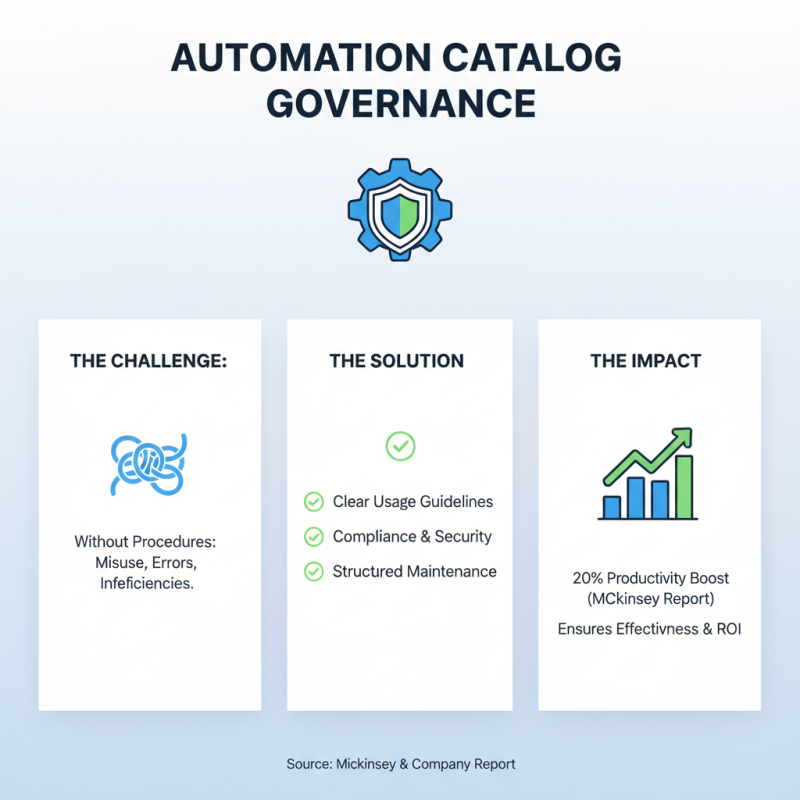
Establishing governance and maintenance procedures for an automation catalogue is crucial for ensuring its effectiveness. According to a report by McKinsey, organizations that prioritize automation governance experience a 20% increase in productivity. This governance involves setting up clear guidelines for usage, compliance, and security. Without such procedures, teams may misuse automation tools, leading to errors and inefficiencies.
Regular audits and updates to the catalogue are necessary. A study from Gartner indicated that 70% of organizations fail to optimize their automation tools due to neglect in maintenance. Regular reviews can help identify underperforming automations. This process fosters continuous improvement and adaptation to changing business needs. Sometimes, teams overlook the importance of feedback loops. Gathering insights from users can highlight areas needing refinement.
Additionally, documentation is often poorly maintained. Lack of proper records makes it difficult to trace automation effectiveness. Clear, accessible documentation aids in user training and ensures consistency in execution. Yet, it is common for organizations to underestimate documentation's role. Ignoring this can lead to fragmented knowledge and hinder team performance. Balancing governance and creativity in automation can significantly enhance the effectiveness of any catalogue.
Measuring Success: KPIs and Metrics for Automation Effectiveness
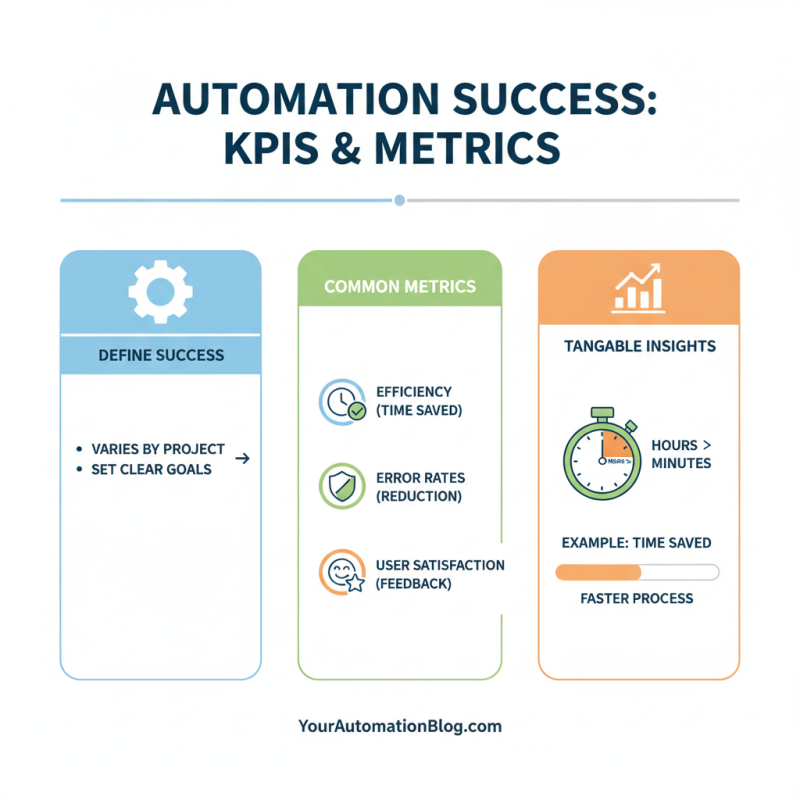
Measuring success in automation requires clear KPIs and metrics. Start by identifying what success looks like. This can vary by project. Common metrics include efficiency, error rates, and user satisfaction. For instance, tracking the time saved through automation offers tangible insights. A process that once took hours can be completed in minutes.
It’s crucial to revisit these metrics regularly. Automation is not a “set it and forget it” solution. What worked last month may not apply today. Be prepared to adjust your KPIs. For example, if error rates rise, explore the root causes. Are the bots functioning correctly? Is there sufficient training for team members?
Utilizing visual dashboards can help track progress. However, remember that data can be misleading. A high efficiency rate may mask underlying issues. Always dig deeper into the numbers. Conduct user surveys to gauge satisfaction. This feedback can often reveal areas needing improvement. Don’t shy away from uncomfortable truths; instead, embrace them for better outcomes.