10 Essential Automation Tips to Boost Your Productivity Today
In today's fast-paced world, maximizing productivity is essential for both personal and professional success. One of the most effective ways to enhance your efficiency is through automation. By embracing automation, you can streamline repetitive tasks, reduce human error, and free up valuable time for more strategic activities. The implementation of smart automation practices not only simplifies your workflow but also empowers you to focus on what truly matters, whether it’s driving innovation, boosting creativity, or improving overall performance.
This article presents ten essential automation tips designed to boost your productivity immediately. From automating mundane daily tasks to utilizing advanced tools that manage your projects effortlessly, these strategies will help you harness the power of automation in your everyday life. Whether you are a solo entrepreneur, a busy professional, or someone seeking to improve their personal organization, these insights will guide you toward a more productive and streamlined existence. Prepare to discover how automation can transform your routine and elevate your productivity to new heights.

Understanding Automation and Its Benefits for Productivity
Automation has become an integral part of modern work environments, significantly impacting productivity. According to a report from McKinsey, automating routine tasks can free up approximately 30% of workers' time, allowing them to focus on higher-value activities that foster creativity and innovation. This shift not only enhances individual productivity but also fosters collaboration across teams as employees have more bandwidth to engage in complex problem-solving and strategic planning.
The benefits of automation extend beyond mere time savings; they also include improved accuracy and consistency in task execution. A study by PwC indicates that implementing automation can reduce operational errors by up to 50%, leading to quality improvements and enhanced customer satisfaction. Automation tools can handle repetitive tasks such as data entry, scheduling, and invoicing, which, when performed manually, are prone to human error. By minimizing these errors, organizations can streamline their workflows, resulting in significant efficiencies that propel overall productivity.
Furthermore, automation helps in gaining valuable insights through data analysis, allowing businesses to adapt their strategies based on real-time information. A report by Deloitte emphasizes that organizations that leverage automation effectively have experienced a 40% increase in profitability over their peers, highlighting the profound impact of automation on financial performance as well. The integration of automated processes thus not only enables a more productive workforce but also positions organizations competitively in their respective markets.
10 Essential Automation Tips to Boost Your Productivity Today
This chart illustrates the effectiveness of various automation tools in enhancing productivity across different tasks. The data demonstrates how automation can significantly improve efficiency in key areas.
Identifying Tasks Suitable for Automation in Your Workflow
When considering productivity enhancement through automation, the first step is identifying tasks in your workflow that are prime candidates for automation. According to a report from McKinsey, approximately 60% of all occupations could have at least 30% of their activities automated, suggesting immense potential for efficiency gains across various sectors. Routine tasks such as data entry, scheduling, and report generation often consume significant time and resources, making them ideal for automation solutions.
Leveraging automation in these identified areas can yield considerable benefits. For instance, the Association for Advancing Automation (A3) indicates that organizations implementing automation can see productivity rates rise by up to 40%. This productivity boost is not only about speed; it also allows employees to focus on higher-value tasks, fostering innovation and strategic thinking within the organization. By systematically evaluating your workflow for repetitive and time-consuming tasks, you can prioritize automation efforts that lead to meaningful improvements in operational efficiency.
10 Essential Automation Tips to Boost Your Productivity Today
| Task |
Suitable for Automation |
Recommended Automation Tool |
Expected Time Saved per Week |
| Email Sorting |
Yes |
Spark or Gmail Filters |
2 hours |
| Social Media Posting |
Yes |
Hootsuite or Buffer |
3 hours |
| Data Entry |
Yes |
Zapier or Airtable |
4 hours |
| Report Generation |
Yes |
Google Data Studio |
5 hours |
| Meeting Scheduling |
Yes |
Calendly or Doodle |
1 hour |
Choosing the Right Tools and Software for Automation
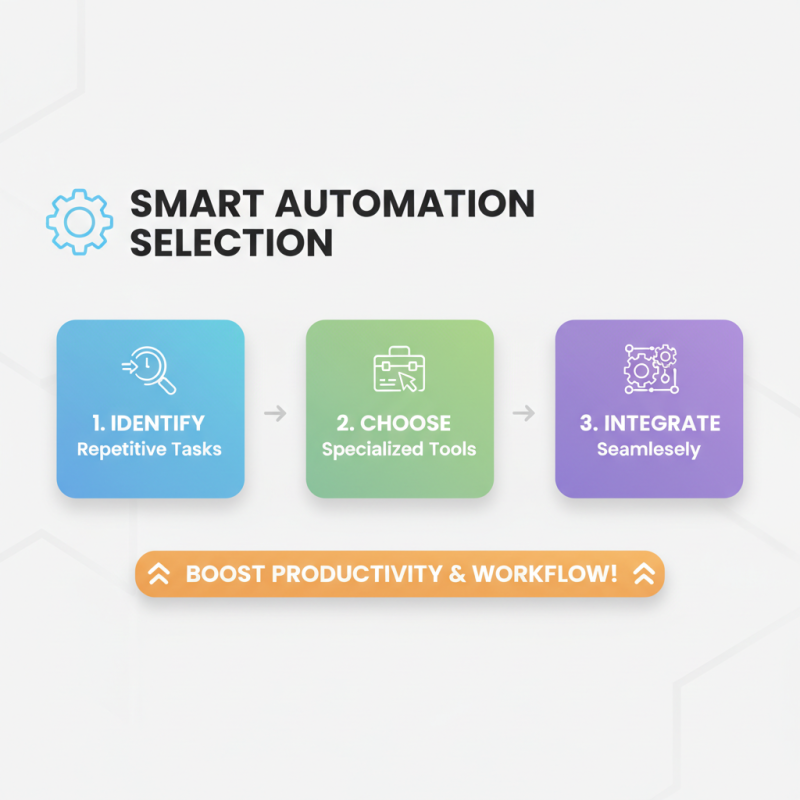
When it comes to automation, selecting the right tools and software is crucial for enhancing your productivity. With a multitude of options available, it’s important to evaluate your specific needs and workflows. Start by identifying repetitive tasks that consume significant time. Once you have these identified, look for tools that specialize in automating these tasks, ensuring they integrate smoothly with your existing systems.
One essential tip is to leverage platforms that offer easy-to-use interfaces. These platforms allow you to set up automation processes without the need for extensive technical knowledge. Invest time in learning the features of your chosen software, as many tools offer tutorials and support resources. Additionally, consider tools that provide analytics to monitor the effectiveness of your automated workflows, helping you to make informed adjustments as needed.
Another key point is to prioritize flexibility in your automation tools. Tasks and processes evolve, so the ability to adapt your tools to new requirements or changes in your workflow is imperative. Regularly reassess your automation strategy and the tools you utilize to ensure they continue to meet your needs and contribute positively to your productivity goals. By carefully selecting and continuously optimizing your automation tools, you can streamline your processes and free up time for more impactful work.
Implementing Automation: Step-by-Step Guide for Beginners
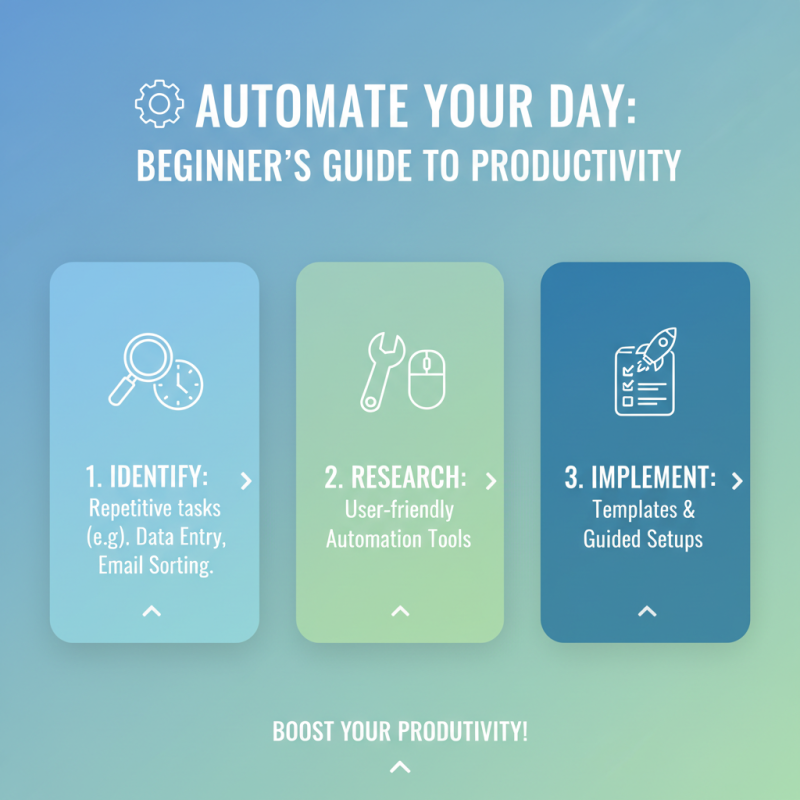
Implementing automation in your daily tasks can significantly enhance your productivity, especially if you are a beginner. The first step is to identify repetitive tasks that consume your time. These could include data entry, email sorting, or any routine process that could benefit from automation. Once you have outlined these tasks, research available automation tools that align with your needs. Focus on user-friendly platforms that offer templates or guided setups, making it easier for you to get started without a steep learning curve.
After selecting the right tools, it’s crucial to create a clear plan for implementation. Begin with one or two processes to automate at a time; this will allow you to measure the effectiveness of automation without overwhelming yourself. As you set up your automation workflows, ensure to test them thoroughly to catch any glitches. Monitor the results over a few weeks to ascertain improvements in efficiency and time-saving, and adjust your processes as necessary. As you become more comfortable, you can gradually expand your automation efforts to other tasks, transforming the way you work and freeing up valuable time for more critical activities.
Monitoring and Adjusting Your Automation Processes for Optimal Results
Monitoring and adjusting automation processes is crucial for achieving optimal results in any business. A report by McKinsey found that organizations optimizing their automation efforts can see productivity gains of up to 20-30%. However, simply implementing automation tools is not enough; ongoing assessment of these processes ensures they remain aligned with organizational goals and market demands. Regularly reviewing automation workflows can reveal bottlenecks and inefficiencies, allowing teams to recalibrate their strategies effectively.
Data from the Institute for Robotic Process Automation & Artificial Intelligence highlights that 72% of companies utilizing automation have reported improved accuracy and efficiency in their operations. This improvement underscores the importance of not only deploying automation but also actively monitoring its performance. By leveraging analytics tools, businesses can track key performance indicators (KPIs) and make real-time adjustments. For instance, fine-tuning settings based on data insights can lead to enhanced output quality and a reduction in processing times, ultimately driving greater employee satisfaction and customer service excellence.