
Choosing the right Safety Lockout Box is not a simple purchasing decision. It is a practical control that affects how clearly workers isolate hazardous energy during maintenance. A box may look strong on a warehouse shelf, yet fail when exposed to dust, rain, chemicals, or repeated handling. Real experience matters here. Inspect the box where it will be used, not only in a product photograph.
James Reason, a respected safety researcher, stated, “We cannot change the human condition, but we can change the conditions under which humans work.” This principle fits lockout planning. The right Safety Lockout Box should make safe behavior easier, more visible, and less dependent on memory. Check its capacity, lock points, identification area, visibility, and resistance to the local environment. Consider whether several authorized employees can apply personal locks without crowding the mechanism. Small details matter. A cramped box creates hesitation. Hesitation can become exposure.
Reliable selection also requires evidence. Review manufacturer specifications, test documentation, material details, and cleaning requirements. Confirm that the design supports your written energy-control procedures and applicable workplace requirements. Do not assume one model suits every site. A compact plastic box may work inside a clean electrical room but perform poorly beside a wet processing line. That assumption deserves a second look. Ask maintenance workers what actually slows them down. Their answers may reveal missing labels, weak hinges, or poor access. The best choice is not always the most expensive one. It is the box that remains identifiable, usable, and secure during real work.
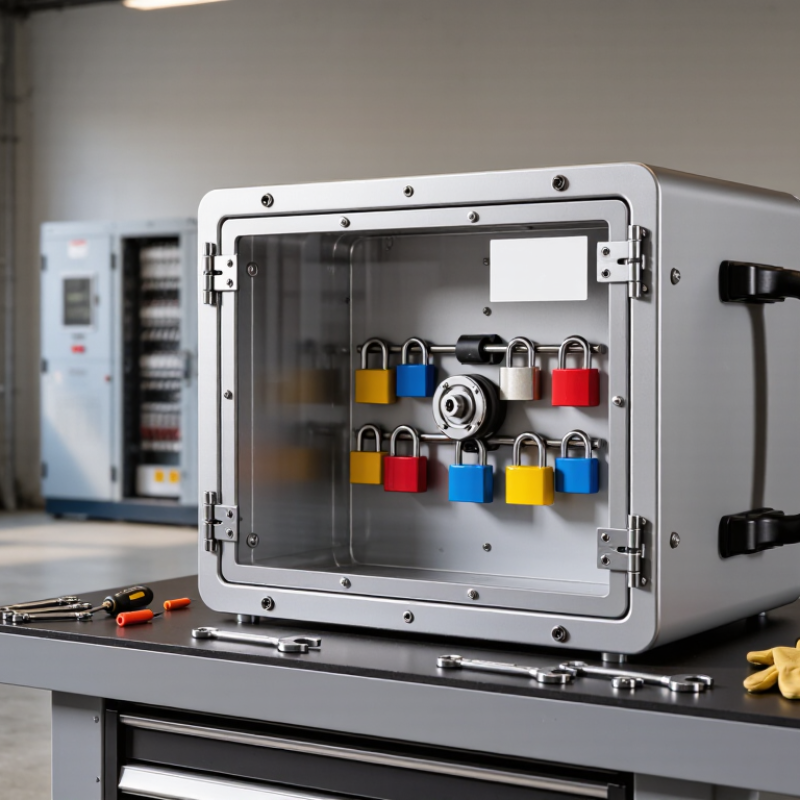
A safety lockout box is a secure container for keys, locks, and energy-control information. It supports group lockout procedures during maintenance, inspection, or repair work. Each authorized worker applies a personal lock to the box. The equipment cannot be restarted until every worker removes their lock.
This system reduces the risk of accidental energization. It also gives teams a clear visual signal: work is still in progress. A suitable box should have enough space for all required locks, durable construction, and easy-to-read labels. Check whether it suits the work environment, especially where dust, moisture, or frequent handling is expected. Poor size selection is a common mistake. An overcrowded box becomes difficult to inspect and use.
Tips: Count the maximum number of workers before choosing a box. Leave extra space for future tasks. Use clear identification cards and keep procedures nearby. Inspect hinges, lock points, and labels regularly. Never treat the box as a substitute for verifying zero energy. That step is easy to overlook. A documented procedure, trained workers, and a final communication check make the system more reliable. Reconsider the setup after every incident, near miss, or major equipment change.
How to Choose the Right Safety Lockout Box?
Which Workplace Hazards Require a Lockout Box?
A lockout box is needed when equipment can release dangerous energy during servicing. Common sources include electricity, compressed air, hydraulic pressure, steam, heat, gravity, and moving machine parts. A conveyor may still move after its power switch is opened. A raised platform may drop when hydraulic pressure escapes. These risks require isolation, personal locks, and verified zero energy.
OSHA’s Control of Hazardous Energy Fact Sheet estimates that effective lockout/tagout practices prevent about 120 workplace fatalities and 50,000 injuries each year in the United States. This figure shows why a shared lockout box matters during complex maintenance. It stores group-control keys and supports individual worker protection. It is especially useful when several technicians service one machine, production line, or electrical panel.
Chemical energy also deserves attention. Pressurized cleaning lines, reactive fluids, and heated tanks can remain hazardous after shutdown. Check valves can leak. Stored energy can return unexpectedly. A box alone does not make the task safe. Workers must identify every isolation point, test for zero energy, and confirm each person’s lock before work begins. OSHA’s 29 CFR 1910.147 requires documented procedures and training for covered hazardous-energy tasks. The boundary is not always obvious. A rushed inspection can miss a secondary motor, a trapped pressure pocket, or gravity-loaded equipment.
| Workplace Hazard | Hazardous Energy or Source | Typical Equipment | When a Lockout Box Is Appropriate | Recommended Lockout Controls | Selection Considerations |
|---|---|---|---|---|---|
| Electrical energy | Electricity, including stored charge in capacitors and battery systems | Motors, control panels, switchgear, conveyors, battery-powered equipment | A qualified group needs to isolate one or more electrical disconnects and each worker must apply a personal lock. | Open the disconnect, verify absence of voltage, discharge stored energy, and secure the isolation point or key inside the box. | Choose a box with enough lock holes, durable insulation-resistant construction, and space for all isolation keys. |
| Mechanical movement | Rotating, reciprocating, cutting, crushing, or stored mechanical motion | Presses, mixers, saws, rollers, fans, robotic cells | Multiple workers or trades must control several disconnect points before entering a danger zone. | Stop equipment, isolate the prime mover, block or restrain moving parts, and test that motion cannot occur. | Select a box that can hold keys for every isolation device and can be clearly identified at the worksite. |
| Hydraulic pressure | Pressurized hydraulic fluid and pressure trapped in lines or accumulators | Hydraulic presses, lifts, injection machines, mobile equipment | A coordinated maintenance task requires isolation of pumps, valves, and other energy-isolating devices. | Shut down the pump, close and lock valves, bleed pressure, block elevated components, and verify zero pressure. | The box stores keys only; it does not replace valve locks, mechanical blocks, pressure gauges, or verification procedures. |
| Pneumatic pressure | Compressed air, gas pressure, and residual pressure in actuators or piping | Air cylinders, pneumatic tools, packaging machines, compressors | Several authorized workers need individual protection while working on the same pneumatic system. | Close and lock the supply valve, bleed residual pressure, secure moving parts, and confirm zero energy. | Use a box with sufficient capacity for valve-isolation keys and worker locks; verify compatibility with the site procedure. |
| Thermal energy | Steam, hot water, heated surfaces, refrigerants, or cryogenic materials | Boilers, ovens, heat exchangers, refrigeration systems, process piping | Multiple isolation points must remain secured while equipment cools, depressurizes, or is serviced. | Isolate fuel or power, close supply and return valves, drain or vent lines, allow safe cooling, and verify temperature and pressure. | Choose a weather-resistant box if used outdoors and keep it away from hot surfaces, steam, and corrosive atmospheres. |
| Chemical or process energy | Hazardous chemicals, process fluids, toxic gases, and residual chemical pressure | Pipelines, reactors, pumps, tanks, dosing systems | A maintenance team must control multiple valves or energy-isolating devices during a planned shutdown. | Isolate, drain, purge, flush, or blank the system as required; test for hazardous substances before work begins. | Use chemically resistant materials where necessary and keep the box outside the exposure zone. |
| Gravity and suspended loads | Potential energy from raised, suspended, or elevated components | Vehicle lifts, elevators, hoists, raised platforms, machine heads | The task involves several workers and requires control of both power isolation and physical supports. | Lower loads where possible, install rated blocks or pins, isolate the equipment, and verify stability before entry. | The box cannot prevent gravity hazards by itself; use approved blocking and support equipment in addition to lockout. |
| Multiple energy sources or complex systems | A combination of electrical, mechanical, hydraulic, pneumatic, thermal, or chemical energy | Production lines, automated cells, large process systems, facility utilities | A group lockout is needed to coordinate many isolation points, departments, or shifts. | Use a written energy-control procedure, place isolation keys inside the box, and require each worker to apply and remove a personal lock. | Prioritize capacity, visibility, portability, corrosion resistance, tamper resistance, and clear identification. |
Choosing a safety lockout box starts with the equipment it must control, not its appearance. During site inspections, I measure the largest energy-isolating device and the number of authorized workers involved. A compact box may hold six padlocks, yet fail when handles, tags, or hasps are added. Leave practical clearance around every item. Crowded storage encourages damaged labels and hurried work. Measure twice. Record the dimensions.
Capacity should reflect real shutdowns, including maintenance crews, contractors, and spare identification tags. Count current lock points, then allow room for expansion. A useful box should accept each lock without forcing the lid or blocking visibility. Transparent panels help teams verify contents quickly, while a strong hinge and smooth latch reduce handling errors. Drainage holes may matter in damp areas, but they should not expose stored devices to contamination. That detail is easy to miss.
Design also depends on location. Wall-mounted boxes need secure fixing points and readable labels at eye level. Portable models need balanced handles and enough strength for repeated transport. In dusty or corrosive spaces, material selection deserves closer review. I once focused too heavily on capacity and overlooked glove access. The box technically worked, but users struggled with it.
Choosing the right safety lockout box starts with standards, not color or capacity. Check whether its design supports your local requirements and site procedures. In the United States, OSHA 29 CFR 1910.147 is a practical reference for hazardous-energy control. ANSI/ASSP Z244.1 can help teams evaluate lockout and alternative control methods. ISO 14118 is useful when machinery guarding and unexpected startup are involved. These documents do not automatically certify a box. Confirm the current edition, competent-person approval, and regional rules before purchasing. That step is easy to skip.
Look for a box that supports group lockout without crowding. Each authorized worker should have a personal lock position or controlled access. A transparent or clearly labeled cover helps identify equipment, isolation points, and responsible personnel. Durable steel or impact-resistant polymer may suit different environments. Check corrosion, temperature, dust, and moisture resistance carefully. Fit matters. Hinges, hasps, and mounting points should resist forced opening without creating sharp edges. A sealed design can help in washdown areas, while drainage may prevent trapped water.
Do not treat the box as a simple storage cabinet. During site reviews, I have seen unreadable labels and unsuitable locks cause delays. Test the box with actual locks and gloves. Verify that every user can operate it without awkward reaching. Recheck the arrangement after equipment changes, because a once-suitable box can become inadequate.
Choosing the right safety lockout box starts with the equipment and the workers using it. Identify every energy source, including electrical, hydraulic, pneumatic, thermal, and stored pressure. The box should hold all required locks, tags, hasps, and written procedures without crowding. A clear lid helps workers check contents quickly. Consider the number of authorized employees, the worksite environment, and the expected lockout duration.
Installation must support safe, visible access. Mount the box near the isolation point, but outside the danger zone. Use a solid surface that will not loosen under repeated handling. Mark the box with a simple identification label. Keep keys controlled and assign responsibility to trained personnel. A poorly placed box can delay isolation during an emergency.
Maintenance is more than checking whether the door closes. Inspect hinges, latches, mounting hardware, labels, and internal compartments regularly. Remove damaged locks and unreadable tags immediately. Review the inventory after every major shutdown or procedure change. Dust, moisture, and oil can weaken materials over time. An enclosure may appear secure while its mounting screws are slowly failing.
A practical inspection record should note the date, condition, missing items, and corrective action. Workers should understand when the box is ready for use. Training should include a realistic demonstration, not only written instructions. Selection is rarely perfect on the first attempt. Feedback from the maintenance crew may reveal that the box is too small, too distant, or difficult to open with gloves. Reassess those details before relying on it.
Contact our Specialists