
Skip to content

How to Choose the Right Chemical Storage Cabinet

Choosing the right Chemical Storage Cabinet is a practical safety decision, not merely a purchasing task. The cabinet should match the chemicals, containers, workplace conditions, and daily handling routines. A cabinet may look sturdy, yet unsuitable materials can weaken under spills, vapors, or repeated exposure.

Begin with the Safety Data Sheets for every chemical. They identify storage hazards, incompatibilities, temperature concerns, and recommended handling conditions. Acids, bases, oxidizers, and flammable liquids often require separate storage arrangements. Never rely on label color alone. Read the details.

A suitable Chemical Storage Cabinet should offer compatible construction, secure doors, adjustable shelves, spill containment, and a clear load rating. Check whether shelves can hold heavy glass bottles without bending. Inspect hinges, locks, seals, and floor-level corrosion points. Small defects matter.

Ventilation also deserves careful judgment. Some chemicals require controlled ventilation, while others should remain in approved, sealed storage. Connecting a cabinet to ventilation without professional assessment may create new risks. Ask a qualified safety specialist when the product information is unclear.

Real workplaces are rarely perfect. Cabinets may become crowded, labels may fade, and staff may place containers incorrectly during busy shifts. Good selection must therefore support inspection and disciplined use. Leave enough space for readable labels and upright containers. Keep incompatible substances apart.

Manufacturer documentation, recognized safety guidance, and workplace risk assessments provide stronger evidence than sales claims. Confirm cabinet capacity, intended chemical classes, testing information, and maintenance requirements before ordering. The cheapest option may become expensive after one preventable spill. Choose carefully, then review the decision as conditions change.
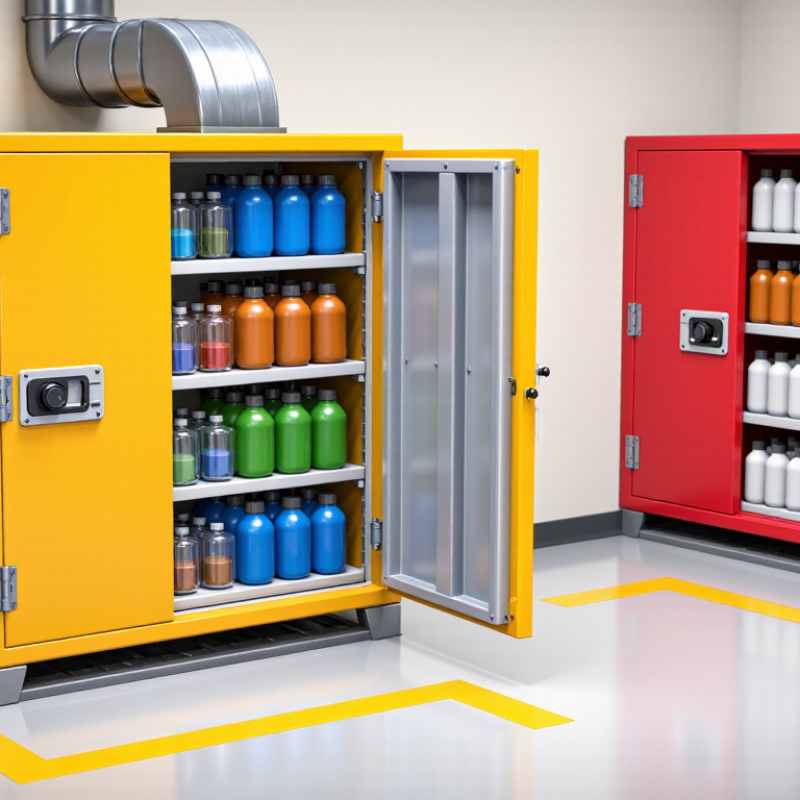
How to Choose the Right Chemical Storage Cabinet

Identify the Chemicals, Hazards, and Storage Requirements

Choosing a chemical storage cabinet starts with identifying the chemicals, not selecting a cabinet by size or appearance. Read each Safety Data Sheet and record the chemical name, concentration, physical state, and storage temperature. Note whether it is flammable, corrosive, toxic, reactive, or oxidizing. Some chemicals present more than one hazard.

Compatibility matters. Never store materials together simply because they arrived in the same shipment. Separate incompatible groups, such as acids and bases, or oxidizers and flammables. Check container labels, shelf-life dates, and damaged closures during routine inspections. A cabinet should support the chemical’s storage requirements, including ventilation guidance, secondary containment, shelf loading, and access control. A common mistake is focusing on cabinet capacity while ignoring chemical compatibility. That decision can create unnecessary risk.

Tips: Create a simple chemical inventory before buying equipment. Use clear hazard categories and keep the inventory near the storage area. Choose adjustable shelves for changing stock, but do not overload them. Keep containers upright, dry, and easy to inspect. Ask a qualified safety professional to review uncertain classifications. Labels can fade. Replace them when needed. Good storage is not a one-time purchase; it requires regular review as chemicals, quantities, and workplace conditions change.

Match Cabinet Materials to Chemical Compatibility

A chemical storage cabinet is only suitable when its materials can tolerate the chemicals inside. Match the cabinet body, liner, shelves, and hardware to the product’s compatibility information. For example, corrosive liquids may require chemically resistant polyethylene, while some flammable-liquid cabinets use coated steel. The container label and safety data sheet are better guides than appearance alone. A sturdy cabinet is not automatically a compatible one.

Check more than the main panels. Spills can collect at shelf edges, seams, and the bottom of the cabinet, where coatings may wear or liquid may sit unnoticed. Consider every chemical stored together, including vapors and accidental leaks. Separate incompatible substances rather than assuming one cabinet material solves every risk. A clean-looking surface can still hide damage; inspect it regularly, especially after a spill. Exact compatibility can depend on concentration and temperature, so verify uncertain cases with a qualified safety professional.

Tips: Check the safety data sheet before choosing a cabinet. Confirm compatibility for shelves, seals, and coatings, not just the cabinet body. Look for bubbling, cracks, discoloration, or soft spots during inspections. Keep an inventory, and reassess the cabinet when stored chemicals change.

How to Choose the Right Chemical Storage Cabinet

Match cabinet materials to the chemical’s compatibility requirements. The chart shows general material-resistance ratings, where 1 indicates poor compatibility and 5 indicates strong compatibility. Always verify the chemical’s Safety Data Sheet (SDS) and the cabinet manufacturer’s compatibility guidance before storage.

Choose the Right Cabinet Type, Size, and Capacity

Choose the cabinet type for the chemical’s hazards, not just its container. Flammable liquids need a cabinet designed for flammable-liquid storage; corrosive liquids need compatible, corrosion-resistant interiors. Check each product’s safety data sheet, especially its storage and incompatibility guidance. A cabinet is not a universal solution. Keeping incompatible chemicals together because they fit is an easy mistake.

Size the cabinet around actual inventory and container dimensions. Measure the tallest bottle, including its cap, and leave room to lift it without tipping nearby containers. Then estimate the maximum volume stored at one time, not just today’s stock. OSHA’s 29 CFR 1910.106 limits a storage cabinet to 60 gallons of Category 1, 2, or 3 flammable liquids, or 120 gallons of Category 4 liquids. These limits are not a recommended target. A half-full cabinet may be easier to manage. Check shelf load ratings too; glass bottles add weight quickly.

Capacity also depends on usable shelf space, spill containment, and access. Put frequently used containers where staff can reach them without stretching across other bottles. If one cabinet forces awkward stacking, choose more storage or a different layout. Measure twice. I’d also review the setup after a few weeks; real use often exposes a poor fit that a floor plan misses.

Check Safety Features, Ventilation, and Regulatory Standards

Choosing a chemical storage cabinet starts with the hazard, not its color or price. Check the Safety Data Sheet, container labels, and compatibility groups before purchase. A practical inspection should confirm steel construction, leak-resistant shelves, a raised spill sump, and doors that close securely. For flammable liquids, NFPA 30 emphasizes suitable cabinet construction and controlled storage quantities. It does not generally require routine cabinet ventilation for fire protection. Unnecessary vents may spread vapors or weaken containment.

Ventilation needs careful judgment. Some corrosive or toxic chemicals may require mechanical exhaust, depending on the SDS, workplace assessment, and local authority requirements. OSHA’s Laboratory Standard, 29 CFR 1910.1450, also expects exposure controls based on risk, not convenience. FM Global Property Loss Prevention Data Sheet 7-88 highlights separation, ignition control, and housekeeping as important safeguards. BLS recorded 5,283 fatal occupational injuries in 2023, although that figure covers all industries and cannot be attributed to cabinets alone. It still shows why small storage decisions deserve attention. A cabinet can look compliant and remain poorly selected. I once treated ventilation as automatically safer; that assumption needs reconsideration. Verify grounding, shelf loading, door operation, and inspection records. Standards change, and local requirements may be stricter than general guidance.

Plan Cabinet Placement, Organization, and Ongoing Maintenance

Choosing the right chemical storage cabinet starts with careful placement. Set it on a level surface, away from heat, direct sunlight, and busy walkways. Keep exits, electrical panels, and emergency equipment accessible. Check the room’s ventilation requirements before installation. A cabinet beside a sink may seem convenient, but moisture can accelerate corrosion. Leave enough clearance for inspection and safe door operation. When conditions are unclear, consult a qualified safety professional.

Organize chemicals by compatibility, not alphabetically. Separate acids, bases, oxidizers, and other incompatible groups. Use trays to contain small leaks, and keep every container upright. Store heavier bottles on lower shelves. Labels should face outward and remain readable. Keep safety data sheets accessible to workers. Review the inventory regularly, because an overcrowded cabinet creates handling risks. A tidy shelf can still hide an outdated container.

Tips: Inspect the cabinet monthly. Look for corrosion, residue, cracked shelves, damaged seals, and stiff hinges. Check labels after every transfer. Record inspection dates and corrective actions. Replace damaged storage components promptly. Clean minor exterior contamination using approved procedures, never by mixing cleaning products. A checklist helps, but it can create false confidence if nobody acts on the findings. Encourage workers to report unusual odors, leaks, or storage problems immediately.

How to Choose the Right Chemical Storage Cabinet - Plan Cabinet Placement, Organization, and Ongoing Maintenance

Planning Area Decision Criterion Recommended Practice Review or Inspection Frequency
Cabinet Selection Chemical hazard class Select a cabinet designed for the hazards being stored. Keep flammable liquids, corrosive chemicals, oxidizers, toxic substances, and water-reactive materials separated according to the applicable safety requirements and site risk assessment. Before purchase and whenever the chemical inventory changes
Cabinet Selection Capacity and load rating Choose a cabinet with enough internal volume for the current inventory while leaving usable space for safe handling. Confirm that shelves, trays, and the cabinet base can support the combined container weight without overloading. At installation and during quarterly inventory reviews
Cabinet Selection Construction and containment Use chemically compatible, corrosion-resistant materials and adjustable shelves with secure support. Provide secondary containment, such as spill trays or a liquid-tight cabinet base, for containers that could leak. Monthly visual inspection
Cabinet Placement Access and escape routes Position the cabinet where authorized users can reach it without blocking exits, aisles, emergency equipment, electrical panels, fire extinguishers, eyewash stations, or safety showers. Monthly workplace inspection
Cabinet Placement Ventilation and heat sources Follow the cabinet and facility safety requirements for ventilation. Keep chemical cabinets away from direct sunlight, radiators, hot surfaces, ignition sources, and areas subject to flooding or impact. At installation and after facility layout changes
Cabinet Placement Floor stability and security Install the cabinet on a level, stable surface. Secure it against tipping where required, especially in locations exposed to vibration, seismic activity, vehicle traffic, or accidental impact. After installation and following any impact or relocation
Organization Compatibility-based segregation Organize chemicals by compatibility rather than alphabetically. Keep incompatible groups physically separated, including acids from bases, oxidizers from flammables and organic materials, and water-reactive substances away from water-based storage areas. During every restocking activity
Organization Container placement Store containers upright with caps tightly closed. Place heavier containers on lower shelves, keep liquids below eye level, and avoid storing materials where they could fall, roll, or obstruct cabinet doors. Weekly visual check and after restocking
Organization Labeling and inventory control Keep original labels legible and ensure secondary containers are properly identified. Maintain an inventory with the chemical name, hazard information, quantity, location, receipt date, and disposal or review status. Update when materials are received, moved, or discarded
Organization Stock rotation and quantity limits Store only the quantity needed for the work area. Use older compatible stock first, remove expired or degraded materials, and avoid accumulating duplicate containers or unneeded chemicals. Monthly inventory review
Ongoing Maintenance Leak and damage inspection Check containers, caps, shelves, trays, hinges, latches, seals, and cabinet surfaces for leaks, corrosion, swelling, cracks, or other damage. Isolate suspect containers using the site spill and hazardous-waste procedures. Weekly for active-use areas; monthly at minimum
Ongoing Maintenance Housekeeping and spill response Keep the cabinet clean, dry, and free of unrelated items. Clean minor spills only when trained and authorized, using compatible materials and the applicable safety data sheet instructions. Report significant releases immediately. After each spill and during monthly inspections
Ongoing Maintenance Safety data and emergency readiness Ensure current safety data sheets are accessible and that users know the emergency procedures, required personal protective equipment, spill kit location, and reporting process for the chemicals stored. Review at least annually and whenever hazards change
Ongoing Maintenance Training and authorization Limit access to trained personnel. Provide instruction on chemical compatibility, cabinet use, labeling, container inspection, spill response, waste handling, and emergency actions before independent work begins. Before authorization, annually, and after significant changes
Ongoing Maintenance Documented corrective actions Record inspection dates, findings, responsible persons, corrective actions, and completion dates. Remove the cabinet from service when structural damage or contamination makes continued use unsafe. Every inspection and after any incident