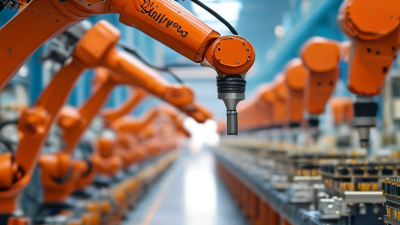
China has become a serious testing ground for automation tools used in factories, warehouses, offices, and customer operations. The numbers are difficult to ignore. The International Federation of Robotics reported 276,288 industrial robot installations in China during 2023. That represented about 51% of global installations that year. (International Federation of Robotics, World Robotics 2024)
The opportunity extends beyond robotic arms. Global buyers can now evaluate Chinese machine-vision systems, warehouse robots, low-code platforms, robotic process automation, and AI-enabled quality inspection tools. The World Economic Forum’s Future of Jobs Report 2023 found that 75% of surveyed companies expected to adopt AI by 2027. This creates strong demand for practical, scalable solutions. It also creates confusion. Not every impressive demonstration survives a busy production line.
Marina Bill, President of the International Federation of Robotics, said, “China is the world’s largest robot market.” Her observation gives this topic useful authority. However, market size alone does not prove product quality, service reliability, or global readiness. Buyers must examine integration support, software compatibility, cybersecurity controls, maintenance response times, and language coverage. A low purchase price may conceal expensive customization. That lesson is easy to miss.
This guide compares China’s leading automation tools through a global buyer’s lens. It considers performance, deployment experience, supplier credibility, and long-term operating costs. Some conclusions may remain imperfect. The market changes quickly, and vendor claims deserve careful testing. Practical evidence matters more than polished demonstrations.
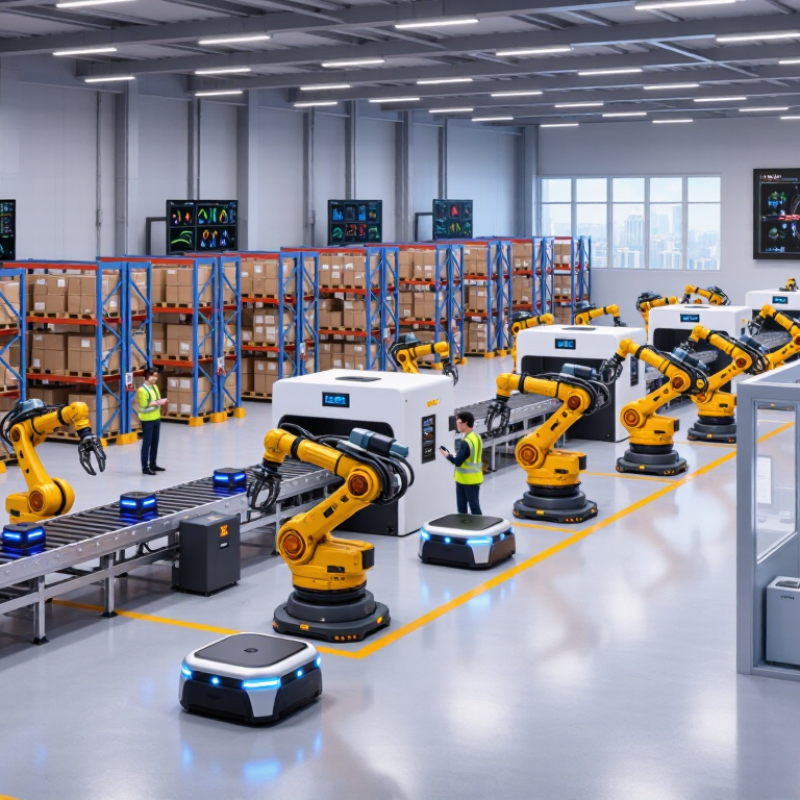
China’s automation tools cover many industrial tasks, from machine movement to data collection. They are not one product category. Factory automation usually includes robotic arms, conveyor systems, motor controls, sensors, and machine-vision equipment. These tools support assembly, packaging, welding, inspection, and material handling.
A compact system may serve a small workshop. A larger production line can combine controllers, drives, robots, safety devices, and production software. Warehouse automation includes sorting units, storage systems, guided vehicles, barcode readers, and picking equipment. Process automation focuses on temperature, pressure, flow, and liquid-level control. It is common in food processing, chemicals, energy, and water treatment. Inspection tools form another group. They use cameras, lighting, measurement devices, and software to identify surface defects or incorrect dimensions.
Classification should also consider integration level. Some tools work as independent machines. Others require connection with factory networks, databases, or enterprise software. Buyers should review voltage, communication protocols, safety functions, spare parts, and installation support. These details often matter more than a low purchase price. A clear technical drawing can prevent expensive changes later. So can a sample test using real materials.
From practical sourcing experience, product descriptions are sometimes too optimistic. Claimed speed may depend on ideal conditions, skilled operators, and stable power. That needs checking. Request test records, maintenance instructions, training plans, and documented compliance with the destination market’s standards. A factory visit is useful, but it cannot replace performance testing. Even reliable equipment may need manual adjustment during its first weeks.
China’s industrial automation market now offers a broad toolkit for global production teams. The strongest options include programmable controllers, servo systems, machine-vision units, collaborative robots, and production-monitoring software. These tools support assembly, packaging, inspection, material handling, and process control. They are not limited to large factories.
Programmable controllers remain central in many Chinese production lines. They connect sensors, motors, valves, and safety circuits with consistent timing. Servo systems add accurate movement for cutting, filling, and electronic assembly. Machine vision checks labels, dimensions, surface defects, and alignment. A small camera can prevent hundreds of faulty parts from moving forward.
Collaborative robots are gaining attention where flexible labor support matters. They can handle repetitive loading, screwdriving, and sorting tasks. Their value depends on proper risk assessment and operator training. Monitoring platforms also help buyers track downtime, energy use, alarms, and maintenance needs. Clear data matters more than a colorful dashboard.
Global buyers should test communication protocols, documentation, spare-part access, and local service response. A low purchase price may hide integration costs. In one realistic pilot, a vision system performed well under stable lighting but struggled after dust appeared. That weakness was useful. It showed why buyers should test tools during actual shifts, not only in demonstrations. Certification requirements, cybersecurity controls, and language support deserve equal attention before shipment.
Global buyers should compare Chinese automation systems by application, not catalog price. The International Federation of Robotics reported 276,288 industrial robot installations in China during 2023, representing 51% of global installations. Robot density reached about 470 units per 10,000 manufacturing employees. These figures show scale, but scale does not guarantee easy integration.
For PLCs, check scan time, memory, IEC 61131-3 programming support, and replacement availability. Ask for tested communication with your existing drives and safety devices. For robots, compare payload at full reach, repeatability, cycle time, service response, and safety compliance under ISO 10218. A factory floor test matters more than a polished sample video.
Sensors need stable readings in dust, vibration, heat, and changing materials. Compare sensing range, IP rating, calibration intervals, connector standards, and diagnostic data. For control systems, examine alarm history, remote access controls, cybersecurity documentation, and protocol support. The 2024 World Robotics report confirms China’s manufacturing scale, yet it does not measure every supplier’s engineering depth. That gap deserves attention. Cheap hardware can become expensive after integration, training, and downtime. I would request a small pilot line, export documentation, spare-part lead times, and three comparable customer references before approving a larger order. Reliability is proven on the factory floor.
What Are China’s Top Automation Tools for Global Buyers?
Global buyers should judge automation tools by production results, not polished demonstrations. Common options include robotic arms, machine vision systems, programmable controllers, and automated warehouse equipment. Each tool should match the product’s weight, speed, surface, and working environment. A system that performs well with clean samples may fail beside dust, vibration, or uneven lighting.
Test the real workflow. Ask the supplier to process your materials under normal factory conditions. Record cycle time, error rates, changeover time, and operator involvement. Ask for evidence. Request test reports, technical drawings, safety documentation, and clear performance limits. Confirm whether the equipment meets the safety and electrical requirements of your destination market.
Integration often decides success. Check communication protocols, software access, spare-part availability, and remote support hours. Your engineers should understand who owns production data and how it is protected. Calculate installation, training, maintenance, energy use, and downtime costs. The lowest quotation can become expensive after six months. A small pilot is safer than a full deployment, although pilots also consume time and budget. I have seen buyers underestimate staff training and factory layout changes. That mistake deserves attention. Ask for references from similar industries, not merely large export figures. Put response times, warranty coverage, acceptance testing, and upgrade responsibilities into the contract.
Before purchasing automation tools, global buyers should compare integration capability, safety compliance, cybersecurity, technical support, total cost of ownership, and spare-parts availability. The percentages represent a practical due-diligence allocation for evaluating industrial automation solutions, not market share or vendor performance.
Global buyers often look beyond price when selecting Chinese automation equipment. The strongest options usually include PLC control systems, servo drives, machine vision, collaborative robots, and warehouse automation modules. Sourcing should begin with a written specification, not a product photo. Ask for cycle-time data, electrical drawings, software ownership, safety functions, and documented factory acceptance tests. A video call from the production floor can reveal wiring quality and assembly discipline. Details matter.
Integration requires a local engineering plan. Confirm voltage, frequency, network protocols, machine interfaces, guarding, and emergency-stop logic before shipment. Request a digital twin or offline program when possible. Test sample parts using real materials, because polished demonstrations can hide tolerance problems. Arrange a site acceptance test with measurable targets. One weakness remains common: translated manuals may omit maintenance steps. Have a bilingual engineer review them before commissioning.
Worldwide support depends on practical preparation. Keep critical spare parts near the installation site, including sensors, cables, fuses, and communication modules. Agree on response times, remote-access controls, training hours, and escalation contacts. Check local conformity requirements with qualified professionals; certificates alone do not guarantee safe integration. Field projects are sometimes delayed by one missing connector or unclear software ownership. Build a support process that assumes something will go wrong. Then record every fix for the next production line.
Contact our Specialists