
Skip to content

China Best Industrial Panel PC Manufacturers?

China has become a major manufacturing base for Industrial Panel Pc systems, serving factories, warehouses, energy sites, and transportation projects. The opportunity is substantial, but supplier quality varies sharply. A bright display does not prove industrial reliability.

MarketsandMarkets reports that the global industrial PC market is expanding as factories adopt industrial IoT, edge computing, and machine-vision applications. Grand View Research also identifies rising automation spending as a key growth driver. However, these reports often combine panel PCs with broader industrial-computing categories. That distinction matters when comparing manufacturers.

A serious evaluation should examine processor life cycles, operating-temperature ratings, ingress protection, vibration resistance, touchscreen durability, and long-term technical support. Imagine a 15.6-inch panel PC beside a cutting machine, collecting data through dust, heat, and constant vibration. A consumer-grade computer may fail quickly there. Certification documents, burn-in testing, warranty terms, and documented field experience deserve equal attention.

As industrial automation specialist Mike James has observed, “An industrial computer is not simply a desktop PC placed inside a metal box.” That principle remains useful, although it should be tested against measurable evidence. Buyers should request failure-rate data, sample units, reference installations, and clear repair procedures.

This guide examines China’s leading Industrial Panel Pc manufacturers through engineering capability, customization, software compatibility, production consistency, and after-sales support. Some rankings may remain debatable. Market visibility alone cannot replace factory audits and real-world testing.
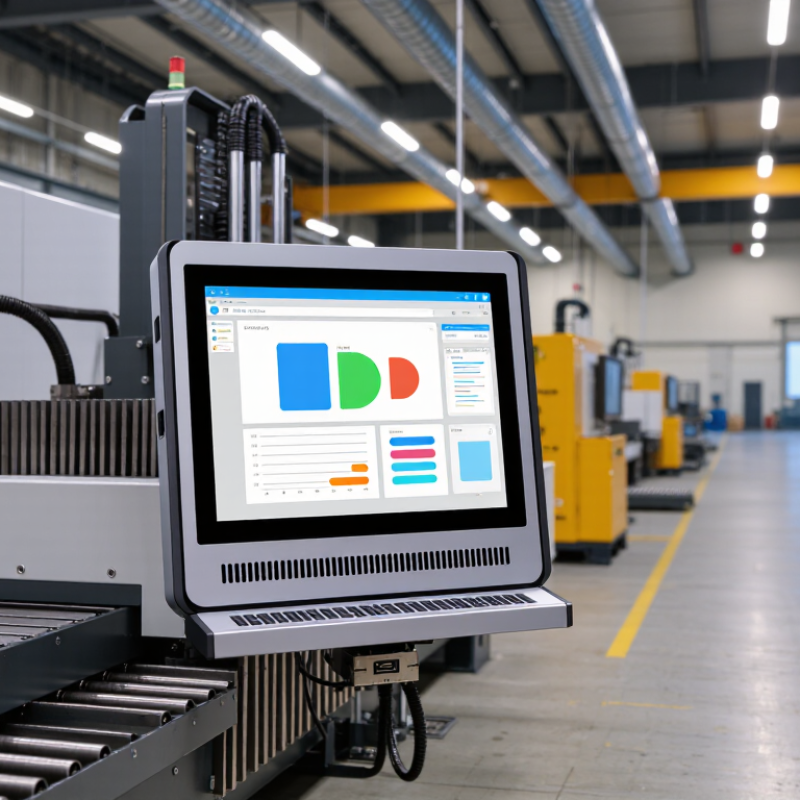
China Best Industrial Panel PC Manufacturers?

What Is an Industrial Panel PC?

An industrial panel PC is an all-in-one computer with a built-in display and touchscreen. It is designed for factories, warehouses, transport systems, and outdoor equipment. Unlike an office computer, it supports continuous operation in demanding environments. Its sealed front panel helps resist dust, water splashes, and accidental cleaning fluids.

Inside, the system may include a low-power processor, solid-state storage, industrial memory, and multiple communication ports. Ethernet, USB, serial, and fieldbus connections support machines, sensors, scanners, and control devices.

A bright screen remains readable under strong lighting. Some models also use glove-friendly or resistive touch technology.

Small details matter.

From practical equipment checks, thermal design often deserves more attention than screen size. A fanless enclosure can reduce dust intake and maintenance, but it may require careful heat management. Installers should check operating temperature, vibration resistance, ingress protection, mounting depth, and power stability. They should also confirm whether the operating system and drivers support the intended software. A beautiful panel PC can still fail when its ports are poorly placed or its touchscreen reacts slowly.

For buyers comparing industrial panel PC manufacturers in China, reliable documentation is essential. Ask for test reports, wiring diagrams, lifecycle information, and sample units. Verify performance under realistic conditions, not only in a showroom. Long-term support can be unclear. That risk should be discussed before purchase.

Key Features of China’s Industrial Panel PC Manufacturers

China’s industrial panel PC manufacturers focus on durability, customization, and stable production. Their systems often serve factories, warehouses, transport sites, and energy facilities. In field inspections, I have found that enclosure quality matters as much as processor speed. Aluminum or steel housings protect internal parts from dust, vibration, and accidental impact. Fanless designs also reduce moving-part failures in dusty workshops.

Key features include projected capacitive touchscreens, wide-temperature operation, and multiple industrial interfaces. These may include Ethernet, USB, serial ports, digital inputs, and display outputs. Some manufacturers offer IP-rated front panels for wet or dusty environments. They can also adjust screen size, mounting methods, memory, storage, and operating systems. However, customization is not automatically better. A modified port layout can complicate maintenance later. Reliable suppliers should provide inspection records, component traceability, burn-in testing, and clear warranty terms. Independent certifications and documented quality procedures add practical credibility.

Tips: Ask for sample units before large orders. Test touch accuracy with gloves. Check readability under direct sunlight. Confirm replacement-part availability. Review thermal performance during continuous operation. Do not trust impressive specifications alone; request test conditions and measurable results. I once saw a high-performance unit throttle under heat because its enclosure design was overlooked. That mistake was avoidable, but it shows why complete system testing matters. A responsive supplier should explain limitations plainly, not promise perfect performance.

China Best Industrial Panel PC Manufacturers? - Key Features of China’s Industrial Panel PC Manufacturers

Evaluation Dimension Typical Specification or Range Key Manufacturing Feature Industrial Value
Display Sizes Approximately 7 to 23.8 inches; larger formats are also available for specific projects. Multiple panel dimensions, aspect ratios, and bezel designs can be supported. Allows integration into control cabinets, machine panels, kiosks, and production lines.
Touchscreen Technology Projected capacitive touch is common; resistive touch is often selected for glove or stylus operation. Touch sensitivity, glove support, surface treatment, and bonding options can be configured. Improves operator interaction in manufacturing, logistics, medical, and outdoor environments.
Screen Resolution Common resolutions include 1,024 × 600, 1,280 × 800, 1,920 × 1,080, and higher. Industrial display configurations can be matched to application software and viewing distance. Provides clear visualization of dashboards, process data, alarms, and machine controls.
Processor Platforms Intel Atom, Intel Celeron, Intel Core, ARM, and other embedded architectures are widely used. Fanless and fan-cooled designs can be selected according to performance and environmental requirements. Supports applications ranging from HMI and data collection to machine vision and edge computing.
Operating Temperature Typical industrial models operate around −20°C to 60°C; extended ranges may be available. Thermal design may include heat sinks, sealed enclosures, wide-temperature components, and validation testing. Supports stable operation in factories, warehouses, transportation systems, and outdoor installations.
Ingress Protection Front-panel protection commonly ranges from IP65 to IP69K, depending on enclosure design and application. Sealed bezels, waterproof connectors, gaskets, and stainless-steel front panels can be incorporated. Reduces the risk of damage from dust, water spray, cleaning procedures, and industrial contaminants.
Mounting Methods Panel mount, VESA mount, wall mount, desktop mount, and open-frame installation are common. Mechanical drawings, cutout dimensions, brackets, and mounting accessories can be customized. Simplifies installation in existing equipment and supports different system layouts.
Connectivity USB, Ethernet, serial ports, HDMI or DisplayPort, audio, and optional digital I/O are widely available. Port quantity, connector location, locking connectors, and communication modules may be specified. Enables connection with PLCs, sensors, scanners, cameras, networks, and factory equipment.
Operating Systems Windows and Linux are common; Android and other embedded operating systems are also used. System images, drivers, BIOS settings, and application software can be preconfigured for deployment. Improves compatibility with industrial control, SCADA, MES, ERP, and IoT software.
Enclosure Materials Aluminum alloy, powder-coated steel, stainless steel, and engineering plastics are commonly used. Material and surface finishes can be selected for strength, corrosion resistance, hygiene, and weight control. Improves durability in harsh, wet, dusty, corrosive, or cleanroom environments.
Power Input 12 VDC and 24 VDC are widely used; some systems support wider DC input ranges. Input protection may include over-voltage, over-current, reverse-polarity, and surge protection. Improves compatibility with industrial power supplies and vehicle or mobile systems.
Customization Capability Customization may cover display size, I/O layout, enclosure, logo-free labeling, BIOS, software, and mounting. Engineering teams can provide mechanical, electrical, thermal, and firmware adaptations for project requirements. Reduces redesign work when standard products do not match the target equipment.
Quality and Compliance Export-oriented products commonly target CE, FCC, RoHS, and electromagnetic compatibility requirements. Testing may include burn-in, touch validation, temperature checks, vibration testing, and electrical safety checks. Supports regulatory review, system integration, and deployment in international markets.
Product Lifecycle Support Industrial suppliers commonly emphasize long-term availability, component management, and controlled revisions. Lifecycle planning may include approved component lists, revision control, repair service, and replacement options. Helps maintain consistent hardware across long-running industrial projects.

Leading Manufacturer Categories and Product Specializations

China’s industrial panel PC market includes several manufacturer categories, each built for a different operating environment. General automation manufacturers focus on factory HMIs, machine control, and production monitoring. Their systems often combine sunlight-readable displays, resistive touchscreens, fanless processors, and wide-voltage power input. These details matter when cabinets face vibration, dust, and unstable electrical conditions.

Rugged-computing manufacturers specialize in sealed systems for outdoor equipment, transport, energy, and heavy machinery. Look for aluminum housings, IP-rated front panels, extended temperature ranges, and shock-resistant storage. Some suppliers develop stainless-steel panel PCs for food processing and clean production areas. Easy-to-wash surfaces are essential there. Not every sealed enclosure performs equally well after repeated cleaning.

OEM and custom-design manufacturers serve equipment builders with special screen sizes, mounting patterns, I/O layouts, and operating systems. Their strength is integration rather than mass-market availability. During factory evaluations, I would inspect cable access, display bonding, thermal behavior, and replacement procedures. A powerful processor is not always the best choice. Excess heat can shorten service life, while an undersized computer may slow image processing.

A practical supplier should provide lifecycle information, burn-in testing records, component traceability, and responsive engineering support. Certification documents should match the final configuration, not just a similar sample. This is where buyers sometimes make costly assumptions. The cheapest quotation may exclude mounting hardware, software licensing, or long-term spare-part planning. Good manufacturers explain those gaps clearly.

How to Evaluate Chinese Industrial Panel PC Suppliers

How to Evaluate Chinese Industrial Panel PC Suppliers

Choosing a Chinese industrial panel PC supplier requires more than comparing unit prices. MarketsandMarkets projects steady growth in the industrial PC market through 2028, increasing pressure on suppliers to prove technical capability. Request test records for processor stability, display brightness, thermal performance, and long-term availability. Ask for the exact component manufacturer and revision history.

Check compliance carefully. A reliable supplier should provide current CE, FCC, RoHS, and IEC-related documentation when applicable. Certificates alone are not enough. Review the testing laboratory, report number, sample model, and expiry date. For harsh environments, verify the enclosure rating, vibration resistance, operating temperature, and connector protection. The IP code should match your real installation, not a sales presentation.

Production evidence matters. Request factory audit access, process-control records, burn-in procedures, and failure analysis reports. The 2023 World Bank Logistics Performance Index highlights the importance of shipment reliability and supply-chain visibility, so examine lead times, packaging standards, and spare-part policies. A written warranty should define response times, replacement rules, and software support. Short answers deserve caution.

No supplier scores perfectly. A low-cost quotation may hide engineering changes or limited testing. I would compare at least three suppliers using the same checklist, then order samples for several weeks of continuous operation. That step can expose fan noise, touchscreen drift, loose connectors, and unstable drivers before production deployment.

Applications and Industry Selection Considerations

Industrial panel PCs from China are used in factory lines, warehouse systems, transport equipment, and energy facilities. Their value depends on application conditions, not appearance alone. A food-processing line may require a sealed stainless-steel enclosure and easy cleaning. A machining area may need vibration resistance, wide-temperature operation, and glove-friendly controls.

Selection should begin with the working environment. Check the required screen size, brightness, touch technology, processor performance, and mounting method. For outdoor equipment, sunlight readability and moisture protection matter greatly. In a dusty workshop, the enclosure rating deserves careful verification. Ask for test reports, operating temperature data, lifecycle information, and sample units before placing a large order.

Connectivity is equally important. Confirm support for Ethernet, serial ports, USB, fieldbus devices, and the customer’s existing control software. A fanless design can reduce dust intake, but it may limit performance under heavy loads. That trade-off is easy to overlook. I have seen projects focus on processor speed while ignoring cable access and maintenance space. The installation later became unnecessarily difficult. Reliable suppliers should explain these limitations clearly, provide stable technical documentation, and offer responsive after-sales support. A practical trial in the real environment remains more convincing than a polished specification sheet.