
10 Best Fusion Pipe Welders for Global Buyers
Reliable pipe fusion equipment matters wherever water, gas, and industrial systems must remain leak-resistant. The WHO and UNICEF Joint Monitoring Programme reported that 2.2 billion people lacked safely managed drinking water in 2022. That figure gives pipe installation a human scale. Every joint can affect a household, factory, or remote community.
This guide examines 10 Best Fusion Pipe Welders for Global Buyers. It focuses on heating control, pressure stability, alignment, data recording, portability, and operator support. These details matter on muddy construction sites, in cold storage yards, and beside narrow trenches. ASTM F2620 and ISO 21307 provide important references for polyethylene pipe fusion procedures. DVS 2207-1 also supports professional thermoplastic welding practice. Buyers should still confirm local requirements before ordering.
The Fusion Pipe Welder market includes compact manual units and automated hydraulic systems. Grand View Research’s plastic pipes market analysis identifies water and wastewater infrastructure as major demand areas. MarketsandMarkets also connects polymer pipe growth with utility, construction, and industrial applications. Reports can guide decisions, but they cannot replace field judgment. A machine with impressive pressure ratings may still frustrate crews through weak clamping or poor spare-parts access.
Performance is not everything.
This comparison considers measurable specifications and practical ownership risks. It also recognizes an uncomfortable limitation: published product data is often incomplete or difficult to compare. Some rankings may change after long-term field testing. Global buyers should inspect certificates, verify fusion records, test service response, and match equipment capacity with actual pipe sizes. The best choice is not always the most expensive one.
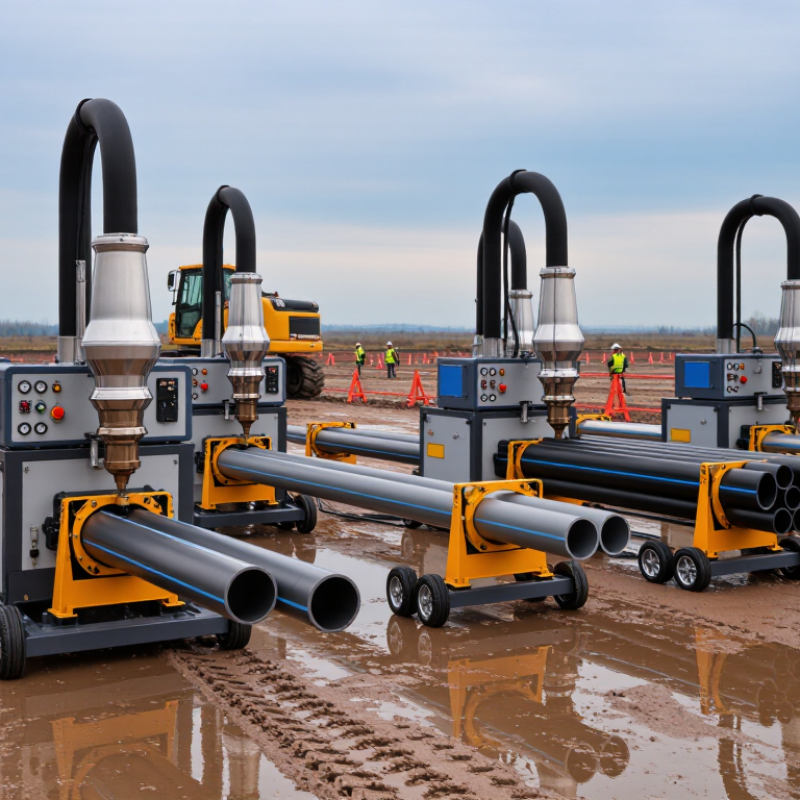
What Fusion Pipe Welding Is and Where It Is Used
10 Best Fusion Pipe Welders for Global Buyers
What Fusion Pipe Welding Is and Where It Is Used
Fusion pipe welding joins thermoplastic pipes by heating their surfaces and pressing them together. The softened material cools into one continuous joint. Common methods include butt fusion, electrofusion, and socket fusion. Unlike threaded connections, fusion joints reduce leakage paths and usually require fewer separate fittings.
The process is widely used in drinking-water networks, wastewater treatment, mining, district heating, irrigation, and industrial chemical systems. The WHO and UNICEF Joint Monitoring Programme reported that 2.2 billion people lacked safely managed drinking water in 2022. This infrastructure gap increases demand for durable pipe installation and controlled joining methods. The International Energy Agency’s World Energy Investment 2024 report also expected global clean-energy investment to exceed 2 trillion dollars, supporting new utility and process-piping projects.
Good results depend on more than a hot plate. Operators must control pipe alignment, heating temperature, pressure, cooling time, and surface cleanliness. ASTM F2620 and ISO 21307 provide recognized guidance for polyethylene pipe fusion procedures. Field inspectors should also record weather conditions, machine settings, operator qualifications, and joint inspection results.
A visible bead helps, but it proves little alone. Poor alignment can hide inside the joint. Dust, moisture, or rushed cooling can weaken performance. It is not magic. Practical training and traceable records remain essential, especially when buyers compare fusion pipe welders for remote projects. Some specifications still need adjustment after real site trials, because laboratory conditions rarely match wind, mud, or uneven ground.
| No. | Welder Profile | Fusion Method | Typical Pipe Size Range | Common Materials | Typical Heater Temperature Range | Primary Applications | Key Advantages | Important Buying Considerations |
|---|---|---|---|---|---|---|---|---|
| 1 | Hydraulic Butt-Fusion Machine for Large-Diameter Pipe | Butt fusion Hydraulic clamping, facing and controlled joining | 315–1,600 mm Typical use: 500 mm and above | PE100, PE80, PP and compatible thermoplastics | Usually 180–260°C, selected according to the material and approved procedure | Municipal water mains, gas distribution, industrial pipelines, mining slurry and water-treatment lines | High joining force, strong alignment and repeatable results on thick-wall pipe | Check hydraulic pressure control, clamping range, machine footprint, lifting requirements and compliance with ISO 21307, ASTM F2620 or DVS 2207-1 |
| 2 | Manual or Hydraulic Butt-Fusion Welder for Medium-Diameter Pipe | Butt fusion Manual or hydraulic operation | 63–630 mm | PE, PP and selected thermoplastic pressure pipe | Typically 180–250°C, depending on resin and procedure | Water supply, irrigation, compressed-air systems, wastewater and utility construction | Versatile size range with a good balance between portability and joining force | Confirm actual pipe outside-diameter range, SDR compatibility, heater uniformity and availability of interchangeable inserts |
| 3 | Compact Manual Butt-Fusion Welder for Small Pipe | Butt fusion Manual clamps and hand-operated pressure | 20–160 mm | PE, PP, PB and other weldable thermoplastics | Commonly 180–250°C, controlled by a thermostatic heater | Building services, small irrigation networks, plumbing repairs and low-volume fabrication | Low transport weight, simple setup and economical operation | Look for a stable frame, accurate temperature control, non-stick heater coating and clear pressure or force guidance |
| 4 | Electrofusion Control Unit for Utility Pipework | Electrofusion Electrical current heats resistance wires inside a fitting | 20–1,000 mm, depending on fitting system | Primarily PE80 and PE100; compatible electrofusion fittings must be used | Controlled by the fitting's barcode, data plate or manufacturer-approved parameters | Gas and water service connections, repair saddles, tie-ins and restricted-access installations | No pipe-end facing machine is required; suitable for confined areas and complex repairs | Verify output voltage and current, barcode or manual input functions, data recording, generator compatibility and ISO 12176-2 conformity |
| 5 | Electrofusion Processor with Traceability Functions | Electrofusion Automated fusion cycle with data logging | 20–630 mm, subject to fitting manufacturer limits | PE pressure pipe systems and approved electrofusion fittings | Automatically set from fitting data; normally no manual heater temperature setting is required | Gas networks, drinking-water infrastructure and projects requiring documented joint records | Stores fusion parameters, operator information, error codes and job records for quality assurance | Check barcode standards, memory capacity, export format, calibration service, ingress protection and operating-temperature range |
| 6 | Socket-Fusion Welder for Small-Diameter Thermoplastic Pipe | Socket fusion Heated male and female tools create a bonded socket joint | 16–125 mm, with tooling determined by the pipe system | PP-R, PP, PE and other socket-fusion-compatible materials | Often 200–270°C, depending on material and applicable standard | Hot- and cold-water plumbing, building services, process piping and small irrigation systems | Fast installation, compact tooling and practical use in workshops or service vehicles | Check tool-size accuracy, heating-surface coating, temperature stability, electrical plug standard and compliance with ISO 15874 or the relevant pipe standard |
| 7 | CNC or Automatic Butt-Fusion Machine for Fabrication Shops | Automated butt fusion Programmable hydraulic cycle and digital monitoring | 90–630 mm, with larger configurations available | PE, PP, PVDF and other approved thermoplastics | Typically 180–260°C, set for the specific material and qualified procedure | Prefabricated manifolds, industrial pipe spools, skid systems and repeat production | Consistent heating, pressure and dwell times with reduced operator variation | Evaluate control accuracy, stored welding recipes, calibration records, hydraulic maintenance and operator training requirements |
| 8 | Low-Pressure or Gravity-Drainage Butt-Fusion Welder | Butt fusion Light-duty clamping and heating system | 110–500 mm | PE and selected polypropylene drainage pipe | Usually 180–240°C, subject to the pipe manufacturer's procedure | Stormwater drainage, sewer rehabilitation, landfill drainage and non-pressure conduits | Lower equipment cost and easier transportation than heavy pressure-pipe machines | Confirm whether the machine supports the pipe wall thickness, ovality correction and alignment requirements of the drainage system |
| 9 | PVDF and High-Temperature Thermoplastic Fusion Welder | Butt or socket fusion High-accuracy heater and controlled joining cycle | 20–315 mm | PVDF, PP-H, ECTFE and other chemically resistant thermoplastics approved for fusion | Approximately 220–300°C, depending on the material and qualified joining procedure | Chemical processing, semiconductor utilities, pharmaceutical systems and laboratory water treatment | Suitable for demanding corrosion-resistant piping where contamination control is important | Check temperature uniformity, material compatibility, clean-room or low-contamination requirements and documented welding procedures |
| 10 | Battery-Powered or Portable Electrofusion Welder | Electrofusion Portable power supply for field joining | 20–315 mm, depending on output capacity and fitting system | PE and compatible electrofusion fittings | Controlled by fitting parameters rather than a manually selected heater temperature | Emergency repairs, remote pipelines, service connections and locations without reliable mains electricity | Easy transportation, rapid deployment and reduced dependence on generators | Assess battery runtime, charging time, maximum fusion energy, weather protection, spare batteries and compatibility with local fitting standards |
| Selection note: Fusion pipe welding joins compatible thermoplastic components by heating their mating surfaces and applying controlled pressure or electrical energy. Actual heating temperature, bead dimensions, pressure, cooling time and allowable pipe sizes must always follow the pipe, fitting and equipment manufacturer's qualified procedure. Pipe material, diameter, wall thickness, SDR, ambient conditions, alignment and applicable local standards can change the required settings. | ||||||||